Feature
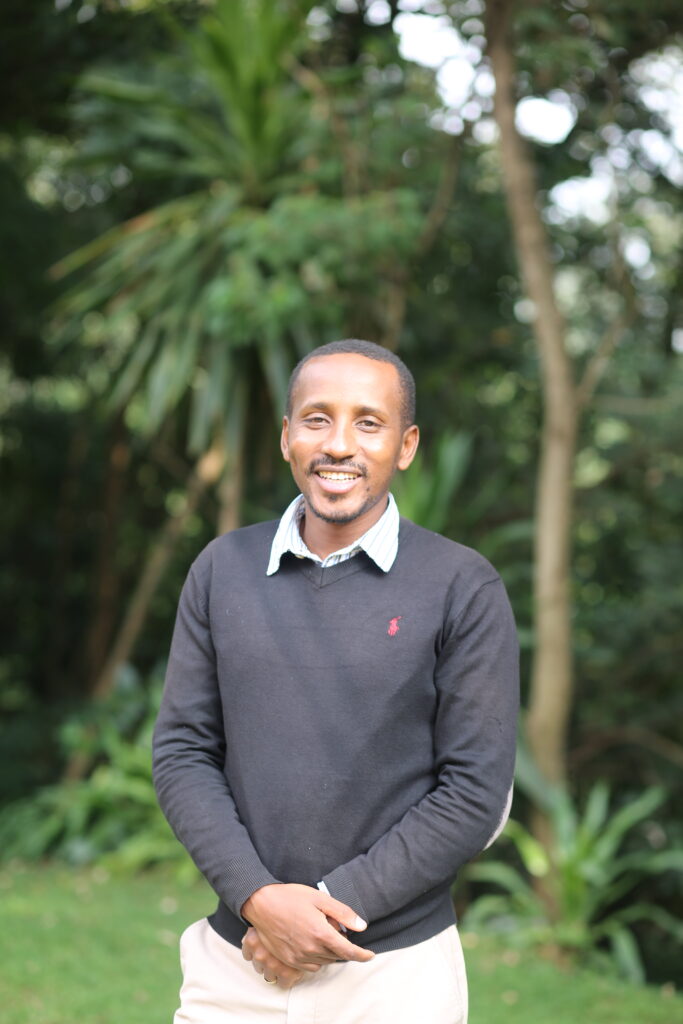
PAUL GACERU: Nurturing a Greener Tomorrow

For years, the significance of nature conservation has been overlooked by the majority of Kenyan citizens. Many perceive it as the sole responsibility of the government. According to Paul Gaceru, Species and Science Program Manager at Nature Kenya, this perception contradicts the lessons we have been taught about conservation in our education system. In an insightful conversation with DIANA RACHEL MBUGUA, Gaceru emphasises the urgent need for individuals to align their actions with their knowledge. He sheds light on the crucial role of corporate entities such as Kenya Breweries Limited in driving sustainability programs and fostering a culture of environmental conservation.
In the heart of Kenya, an extraordinary tale of green transformation unfolds! Just before our rendezvous at the Nature Kenya headquarters, Paul Gaceru shared a fascinating encounter he had with a young man in Limuru. For the past two decades, this dedicated individual had been cultivating a once-abandoned tea plantation in Brackenhurst, Tigoni, into a thriving forest wonderland. Now, this serene oasis beckons nature lovers from all corners of the country, luring them with its enchanting charm.
In the middle of the amazing attraction of these lush green havens, Gaceru is perplexed by a baffling paradox. He is perplexed as to why individuals enjoy strolling through these serene surroundings yet are hesitant to bring the same greenery into their own homes.
“You see many people going to Karura forest to run, but when you go to their homes, they have not planted even one tree,” Gaceru laments.
Meet Paul Gaceru, the passionate wildlife enthusiast and species and science program manager at Nature Kenya, who is on a mission to uncover the secrets of this nature fascination. His passion for the wild began in his youth when he roamed untamed landscapes as part of Wildlife clubs and Scouting ventures. Now, he’s channelling that ardour into Nature Kenya’s vision of connecting people with nature for a sustainable future.
The organisation’s strategic plan is supported by a number of pillars, including species and places. Paul adds a scientific element to the pillar. He also backs the sustainability pillar, which collaborates with businesses and the government to make sure that there are effective regulatory procedures and commercial practices that assist nature protection.
“Take Kenya Breweries Limited (KBL), for example, their core raw materials are nature-based. They use water for production and this water has to come from somewhere. Water does not produce itself, so to ensure that they can achieve sustainability, they need to look at how best to conserve the water as well as its replenishment,” Gaceru says.
“We approach them to provide those solutions that ensure that their business is sustainable through into the future. We explore areas to do with water replenishment capacity and discuss with them how we can work together to implement interventions,” Gaceru explains the sustainability journey they walk with KBL.
Since all of the water used to make KBL’s beverages originates from rivers, which originate in forests, more trees are required to create the capacity for the soil to be able to absorb the water. Without water, KBL would be out of business. Therefore, Nature Kenya assists KBL by assisting their enterprise to become much more sustainable through efforts that aid in the replenishment of water. Their primary tasks have been to assist them in planting trees and forest restoration.
In addition to that, Gaceru says KBL also uses electricity to power their machines and equipment. “Kenya is heavily dependent on hydropower. The Seven Folks Dam provides 75 per cent of power in the country, so the replenishment of water is important to keep power generation running.”
“There are also the raw materials used in the production of beer. KBL uses barley and sorghum to make beer, and these plants depend on water to grow. Without adequate forest cover to attract rain, the water towers dry up, and crops don’t get sufficient rain to grow; hence the company will not be able to get these raw materials locally,” Gaceru continues to explain.

KBL has worked hard to make sure they contribute to securing the longevity of their company. Nature Kenya assists them in the aspect of planting trees. They plant 100,000 trees on 100 hectares of land each year in the woods of the Aberdares and Mount Kenya. With the use of science, they can compute replenishment capacities that are based on research.
According to Gaceru, tree growing reduces surface water runoff by two per cent, and also because of the reduction of surface runoff, the water seeps into the ground through the tree roots. The more mature the forest, the more water seeps into the soil and goes deeper to replenish our wells, which then provide and increase the water surface area.
“KBL can demonstrate to their shareholders that they are supporting replenishment of water. If they do their calculations, they can achieve what they call net zero impact on the environment,” he adds.
One of Nature Kenya’s main pillars is to inspire Kenyans to embrace nature. According to Gaceru, the world is changing on a daily basis, and many businesses have been focused on profits without regard to where the raw materials they use are sourced from, or even contemplating giving back to nature.
“A majority of companies engage in a lot of CSR activities, for example, supporting schools but many do not have structures in place to assess impact. Over time, science has shown the majority of driving factors of our economy are nature-based and if companies do not plow back to nature functions, they will be slowly depleting the capacity of nature to provide that service to them,” Gaceru opines.
Nature Kenya has conducted studies on the assessment of ecosystem services, which indicate the importance of nature.
They have been supplying data to KBL that indicates that if certain steps are not taken, they will incur losses that are incompatible with having a sustainable future unless they contribute to nature conservation efforts. They use this data to approach businesses and lobby them to participate in nature conservation efforts.
“It is not the easiest field to persuade businesses to join this bandwagon. We have climate change challenges, and for a long time, issues related to nature protection have not been considered a crucial aspect of Kenyan’s overall well-being, from their health to their economic status. A majority see it as the responsibility of the government. Despite what we were taught in school, the behaviours that follow are not the same.
The primary motivators for this could be economic. Certain necessities are not satisfied, such as the availability of clean cooking energy; hence the depletion of forest cover in search of firewood and charcoal. Communities neighbouring forests continue to invade the forests for farming activities and habitation owing to the fact that they do not own land elsewhere, and this remains a big problem in our country. Behaviour and attitude change is a slow process, and nature has never had a front-row seat in our government priorities,” Gaceru laments.
According to him, nature or the environment is the basis upon which everything is built in the sectors that the government has prioritised, such as health, agriculture, and education. People believe they can cultivate, tear down trees, and create roads, while ignoring the environment, although it is the same area where one must return to save oneself.
It is a system that the majority has been accustomed to, and it requires more education to ensure that more people join the cause of saving the environment. “For example, when you go to countries like Germany, you find societies like Nature Kenya have the highest number of members who advocate for nature benefits.
We need to ensure communities can integrate these systems into their way of life but also help the government ensure the policy processes and policy interventions provide that incentive for people to participate actively,” Gaceru says.
Nature is a part of Gaceru’s daily life. He enjoys what he does because he can see and touch the results of his work and also the impact it creates. By interacting with KBL, he is able to discuss the number of trees planted and how they have grown. He finds emotional gratification in seeing outcomes that contribute to guaranteeing a sustainable future. Doing something constructive in his world is what keeps him going.
Though Gaceru’s job is not easy because it requires a lot of talking, convincing, and proving, when he sees the results, he feels like he is on his way to a brighter future. Nature Kenya wishes to ensure that there is biodiversity in nature and that the conservation of nature is ingrained in our processes.
“I feel a sense of pride when I see someone has established a tree nursery and has sold trees, or when someone tells me they have been able to educate their children through income generated from nature-based activities that are not harmful to the environment,” he concludes.
This article was originally published in Issue 438. Click HERE to read the full issue.
For more, click HERE to join our WhatsApp channel!
You must be logged in to post a comment Login