










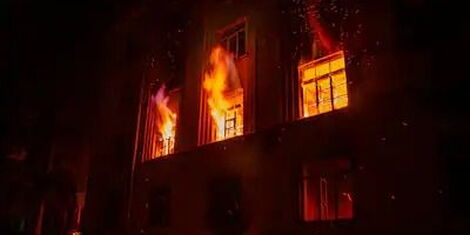
As the second term progresses, a worrying trend has once again gripped Kenya’s education sector. Reports of student unrest, dormitory fires, destruction of property, and abrupt school closures have dominated headlines, leaving parents, teachers, and policymakers asking one pressing question: What is happening in our schools?
The recent closure of Lenana School following student unrest and the heartbreaking tragedy at Utumishi Girls Academy, where a dormitory fire claimed the lives of 16 students, have reignited concerns about the state of student wellbeing, school management, and safety in Kenyan schools.
For many Kenyans, these incidents are not isolated events. They are reminders of a pattern that has resurfaced repeatedly over the years, often peaking during the second term.
Beyond the Headlines
Whenever a school burns or students riot, the public conversation often focuses on punishment and discipline. But beneath the smoke and broken windows lies a deeper issue that deserves attention.
Today’s learners are navigating a very different world from previous generations. They face academic pressure, social media influence, mental health challenges, family struggles, and uncertainty about their future. Yet many schools still operate within systems that offer limited opportunities for students to voice their frustrations constructively.
In some cases, unrest may stem from unresolved grievances. In others, it may be influenced by peer pressure, poor communication between students and administration, or dissatisfaction with school conditions. Experts have long argued that when students feel unheard, frustrations can escalate into destructive behaviour.
Are Schools Listening Enough?
Many schools have invested heavily in academic performance but less in emotional wellbeing and conflict resolution.
Students spend most of the year in school, often away from their families. During adolescence, they are undergoing significant emotional and psychological changes. When concerns about school rules, welfare, food, facilities, or disciplinary measures are not addressed effectively, tensions can build over time.
This raises an important question: Are schools creating enough safe spaces for dialogue?
Regular student forums, counselling services, peer mentorship programmes, and open communication channels can help identify problems before they escalate into crises.
The Mental Health Conversation We Cannot Ignore
Mental health among young people has become an increasingly important issue.
Many students are dealing with anxiety, stress, loneliness, family instability, and pressure to succeed academically. Unfortunately, mental health remains a topic that is not always openly discussed in many learning institutions.
While mental health challenges do not excuse acts of violence or destruction, understanding the emotional state of learners can help schools develop preventive solutions.
The conversation should therefore move beyond discipline alone and include emotional support, counselling, and student engagement.
Should Students Get Longer Holidays?
Some parents and education stakeholders have suggested that learners may need longer breaks to rest and recover.
While holidays provide valuable time for family connection and relaxation, longer breaks alone may not solve the problem.
The issue appears to be more complex than fatigue. Even with additional time away from school, unresolved institutional challenges, communication gaps, and student frustrations could still persist.
Perhaps the better question is not whether students need longer holidays, but whether schools need stronger systems for listening, engaging, and supporting learners.
The Safety Question
The tragedy at Utumishi Girls has also raised serious concerns about school safety measures. Preliminary reports have highlighted questions around emergency preparedness, dormitory safety, and compliance with safety regulations.
For parents, these incidents are deeply unsettling. Schools are expected to be places of learning, growth, and safety. Every tragedy forces the nation to reflect on whether enough is being done to protect learners.
Regular fire drills, functioning emergency exits, adequate supervision, and strict adherence to safety guidelines should not be optional—they should be standard practice in every institution.
A Shared Responsibility
The responsibility for preventing school unrest does not rest solely on students.
Parents, teachers, school boards, counsellors, policymakers, and communities all have a role to play.
Students need discipline, yes. But they also need guidance, understanding, mentorship, and opportunities to be heard.
As Kenya reflects on the recent incidents, perhaps the focus should not only be on what students are doing wrong, but also on what the education system can do better.
Because every burnt dormitory, every school closure, and every lost life is a reminder that something deeper demands our attention.
The real challenge is not simply stopping the next fire.
It is creating schools where frustration never reaches the point of becoming one.




Add Comment