Parenting
What Children Observe From Adult Conflict
Children forget the disagreements, but they remember the feeling. Discover why adult reactions during childhood disagreements shape lifelong emotional lessons.

Children may forget the details of a disagreement, but they rarely forget how it felt when adults reacted. What begins as a simple childhood fight over toys, attention, or play can quickly change into something much heavier when adults step in while emotions are already rising. In those moments, the issue is no longer just about children learning to share or cooperate. It becomes a lesson in how adults handle pressure, frustration and disagreement.
Development experts describe children as emotional learners long before they become logical thinkers. They may not fully understand rules or reasoning, but they are highly sensitive to tone, facial expressions and reactions. They are constantly observing how adults handle things when things go wrong. So when conflict arises, children are not only seeing correction. They are studying behaviour.
A calm response teaches control and problem-solving. A loud or reactive response teaches escalation. A harsh reaction can teach that conflict is something to fear, avoid or fight back against. Over time, these repeated patterns become part of how a child understands the world. In many family environments, especially in extended households where children from different homes interact regularly, small disagreements can easily draw in multiple adults.
A child’s argument may unintentionally become a broader emotional moment involving relatives, caregivers, or parents, each carrying their own stress, expectations, and sensitivities. When this happens, the attention shifts. The original issue fades into the background, while adult emotions take centre stage. Yet children remain present, watching closely, and they absorb more than just words. They absorb atmosphere. They notice raised voices, tense silence, who interrupts, who withdraws and who loses control. To them, these are not just reactions; they are instructions on how conflict works.

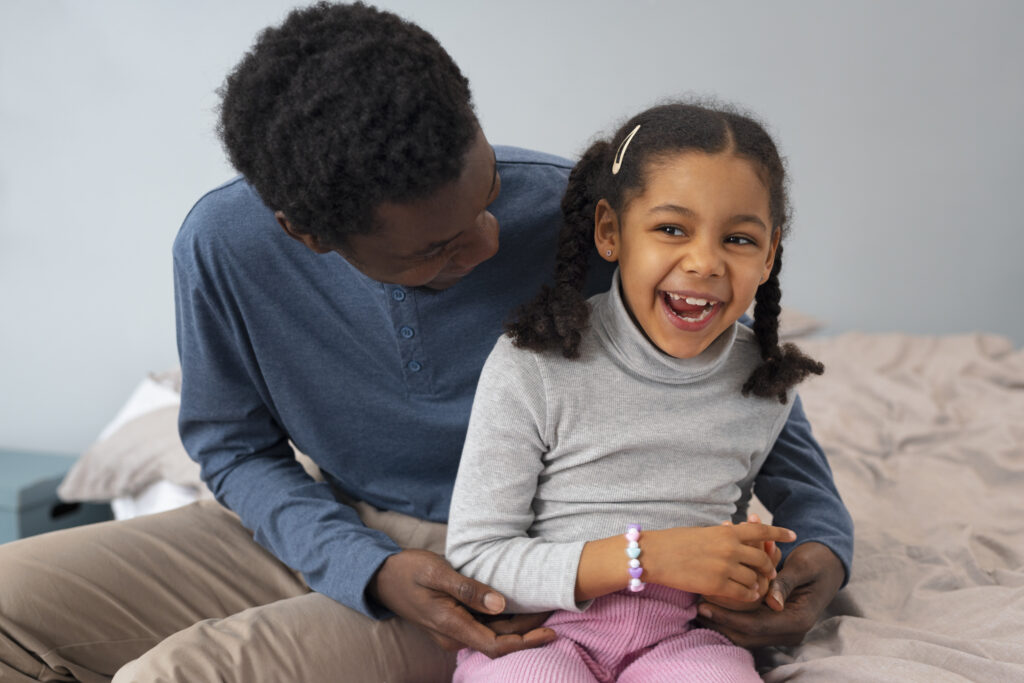
Psychologists often note that children tend to mirror what they repeatedly observe. If anger is the dominant response to disagreement, they may begin to replicate it in their own interactions. If calm communication is consistently modelled, they are more likely to develop emotional regulation and patience. This is why the method of correction matters as much as the correction itself. A pause before responding can change the direction of a moment. Separating children before addressing behaviour can reduce emotional escalation. A lowered voice can de-escalate tension faster than strong words.
These are not signs of weakness in parenting or caregiving. They are signs of emotional awareness. Children do not need perfect adults. They need emotionally conscious ones who understand that every reaction becomes a lesson.
Because long after a disagreement, children rarely remember who was right or wrong in the moment. They remember how it felt when adults handled conflict in front of them. And that memory often becomes their first blueprint for how to respond when life becomes difficult.
For more, click HERE to join our WhatsApp channel!
You must be logged in to post a comment Login