










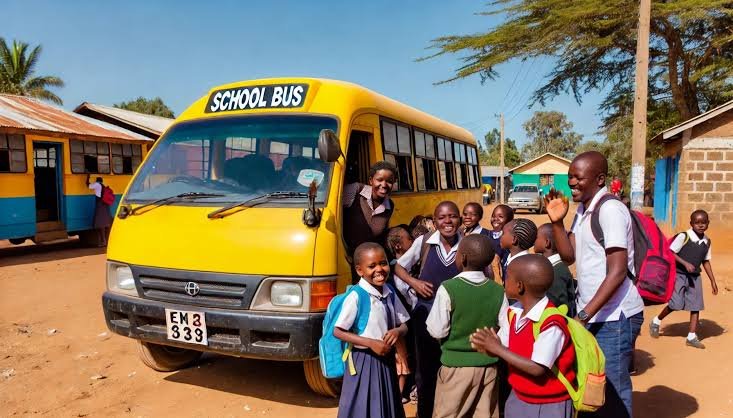
For many Kenyan adults, a school trip was one of the simplest joys of growing up. A day at the Nairobi Snake Park, a visit to the Parliament buildings, and a class excursion to KICC. It cost little, and even families who were stretched thin could usually find the coins.
That is no longer the story parents are telling today.
Louder complaints
In recent weeks, parents have been increasingly vocal about how often schools schedule outings and how much they now cost. In one widely discussed case, a private primary school in Nairobi charged Sh3,500 per learner for a single one-day trip to a wildlife conservancy, only for parents to later learn their children were served nothing more than soda and cupcakes for lunch. The backlash was swift, with parents questioning what educational value the outing actually delivered for the price.
This isn’t an isolated case. Parents have accused institutions of scheduling trips too frequently and pricing them well beyond what feels reasonable.
Sharper squeeze?
The complaints about trips aren’t happening in isolation. They’re landing on top of a household budget that is already stretched. The back-to-school period in January 2026 was described as arriving with louder complaints and tighter budgets than usual, with the National Parents Association publicly urging the Ministry of Education to stop schools from turning away learners over unpaid fees. Households are absorbing the cost of the shift to Competency-Based Education (CBE), which introduced new levels (junior and senior secondary), each carrying its own set of fees and requirements that didn’t exist under the old 8-4-4 system.
Public day secondary schools remain tuition-free, with government capitation covering the core cost. But capitation was never designed to stretch to co-curricular travel, and that’s precisely where trips fall. For day school families, especially in cities like Nairobi, Mombasa and Kisumu, transport already competes with tuition as one of the biggest line items in a school budget. A termly excursion adds another transport bill on top of it.
Private and international schools sit at a different scale entirely. Depending on the institution, annual fees can run from roughly KES 400,000 at the budget end to several million shillings a year at the premium end. Trips, especially international ones, are frequently billed as extras layered on top of an already substantial fee schedule.
Read More: Factors to Keep in Mind While Planning Your Child’s Foreign Education
Unequal trips
Part of what’s fueling parental frustration isn’t the idea of school trips. It’s the sense that many no longer deliver enough to justify the cost. Education commentators have argued that trips in the CBE era should be more than a day out; they should be deliberately designed to build specific competencies, tied to what learners are studying, and run with proper safety planning and accountability for the money collected.
Educators writing on the subject have pointed out that Second Term, the busiest excursion season on the school calendar, is exactly when this tension peaks. A trip after trip is scheduled, and few parents feel able to ask what each one is actually for.
As a parent, do this
Short of a policy shift, you as a parent aren’t entirely without leverage:
- Ask for an itemised breakdown. What exactly does the fee cover? Transport, entry, meals, guide fees? A vague lump sum is harder to question than a broken-down one.
- Raise it collectively through a PTA. Individual complaints are easy to dismiss. A parents’ association raising cost and frequency concerns together is harder to wave off.
- Push for local, lower-cost alternatives. Not every excursion needs to be a flagship destination. Museums, conservancies, and farms closer to home can deliver similar learning value at a fraction of the cost.
- Ask what the trip is teaching. If a school can’t tie an outing to a specific competency or curriculum goal, that’s a fair basis to question whether it needs to happen this term at all.
Bottom line
School trips were never meant to be a burden; they were meant to be a window. For a growing number of Kenyan families, that window now comes with a price tag steep enough to make them think twice. Whether the answer lies in tighter school-level accountability, clearer Ministry guidance on non-fee charges, or simply parents pushing back harder through their PTAs, the conversation about what a “normal” school trip should cost in Kenya is only getting started.
For more, click HERE to join our WhatsApp channel!




Add Comment