










For many people, education is viewed as something that belongs to childhood. If someone misses the opportunity to go to school, society often assumes that chapter has closed forever.
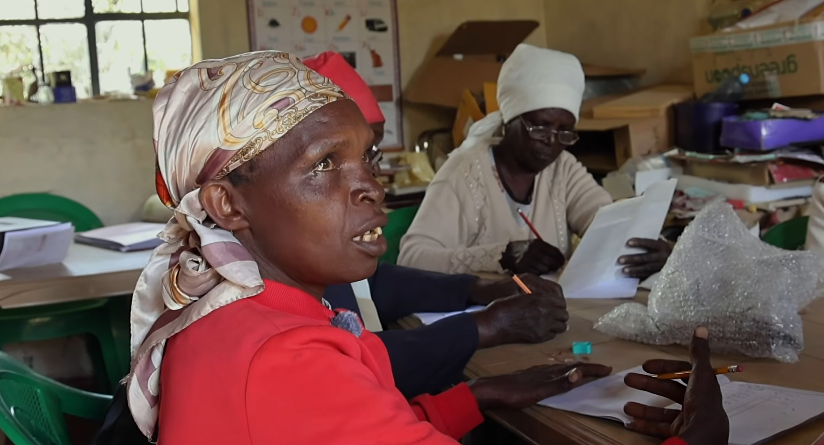
But in Mai Mahiu, Nakuru County, a small classroom is proving otherwise.
Every week, adults who never had the chance to complete their education gather with books and exercise books in hand. Some are grandparents. Others are parents. Many spent decades believing that reading and writing simply weren’t for them.
Today, they are proving themselves wrong.
“We realised that many people here had never had the opportunity to go to school,” says Rev. John Karanja Wanganga, founder of Mutiini Community Church. “Some couldn’t even write their own names. Today they can read, write and do basic mathematics.”
The adult literacy programme was born out of necessity. After the 2007/2008 post-election violence, thousands of displaced families settled in Mai Mahiu with little more than hope. While addressing immediate needs such as food, shelter and education for children, Rev. Wanganga noticed another challenge hiding in plain sight: many adults had never experienced formal education.
The solution was to create a classroom specifically for them. Today, learners who once struggled to write their own names proudly read from books, solve arithmetic problems and continue progressing through different learning levels.
Adult education doesn’t only benefit the learner; it transforms entire households.
One learner shared that before joining the classes, helping her children with homework was impossible. Today, she can support their learning, read alongside them and encourage education from a place of confidence rather than frustration.
This is one of the most overlooked benefits of adult literacy. When parents become learners, children witness resilience, perseverance and the value of lifelong education.
Research consistently shows that parents who participate in learning activities are more likely to create environments where education is valued, ultimately improving children’s academic outcomes.
For adults who missed out on school because of poverty, displacement or other life circumstances, returning to a classroom is about much more than acquiring knowledge. It restores confidence.
Being able to sign one’s own name, read instructions, understand numbers or communicate independently allows adults to participate more fully in everyday life. It reduces dependence on others and opens doors to employment, entrepreneurship and informed decision-making.
Education becomes an act of dignity. The literacy classes are only one part of a broader vision at Mutiini Community Church.
Alongside the adult learning programme, the church runs a community library, vocational sewing classes for women, school support programmes, feeding initiatives for children and the elderly, and mentorship activities aimed at strengthening families.
Rather than treating education as a standalone intervention, the programmes recognise that healthy communities thrive when learning, nutrition, livelihoods and emotional support work together.
Across Kenya, many adults still live with limited literacy skills due to poverty, conflict, early marriages, disability or interrupted schooling. Yet their desire to learn has never disappeared.
Adult education offers a second chance not just to read books, but to rebuild confidence, improve livelihoods and strengthen families. It reminds us that learning has no expiry date.
As Rev. Wanganga’s classroom demonstrates, it is never too late to pick up a pencil, open a book and begin again. Because education is not simply about earning certificates. Sometimes, it is about discovering that your story is still being written.
Watch the full Feature here
For more, click HERE to join our WhatsApp channel!



Add Comment