










As Kenya heads towards the 2027 General Election, concerns over hate speech, ethnic profiling, political intolerance and increasingly hostile public discourse are once again coming to the fore.
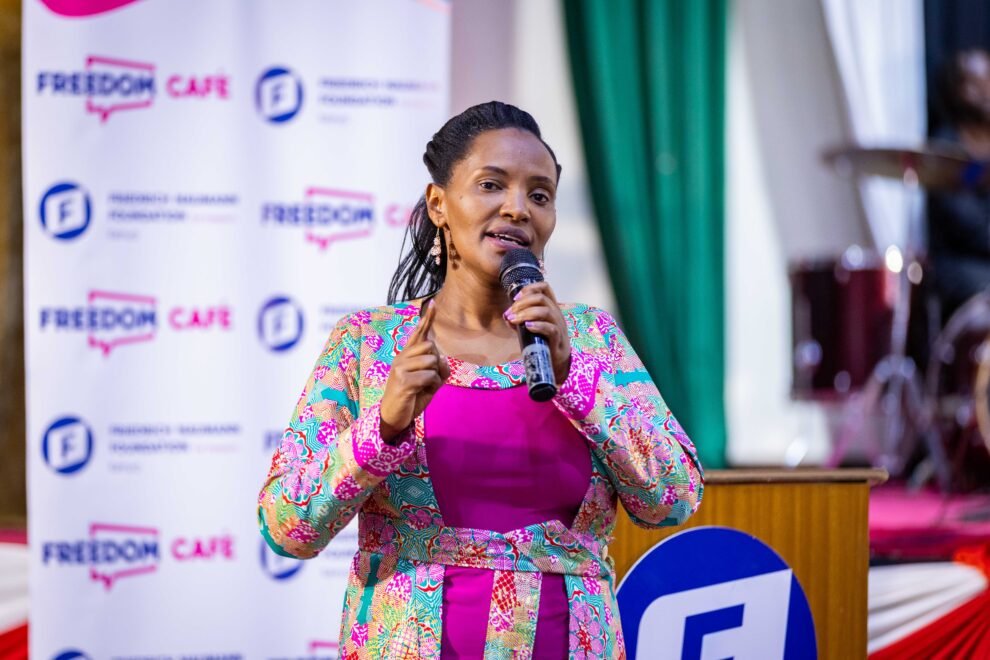
The issues took centre stage at a Freedom Café organised by the Friedrich Naumann Foundation (FNF) and Article 10 at Ufungamano House, Nairobi. Under the theme “Winning Without Violence,” political, religious and youth leaders explored how Kenya can navigate electoral competition without descending into division and violence.
The discussion comes amid warnings from the National Cohesion and Integration Commission (NCIC) and other agencies that hate speech, ethnic contempt, political intolerance and incitement could threaten national cohesion ahead of the 2027 polls. The NCIC is also investigating at least eight prominent politicians over allegations involving hate speech, ethnic profiling or incitement.
“We can disagree and still recognise one another as fellow citizens”
FNF Senior Project Manager Judie Kaberia challenged Kenyans to separate political competition from hostility.
“Political competition does not prescribe that we become enemies. We can disagree, sometimes strongly, and still recognise one another as fellow citizens.”
The call carries particular weight given Kenya’s history of election-related violence. The 2007-08 post-election crisis left more than 1,100 people dead and about 650,000 displaced, exposing how political disputes can quickly deepen ethnic and community divisions.
Yet peaceful political transitions are possible. In Botswana’s 2024 election, President Mokgweetsi Masisi conceded defeat before the final results were announced, ending his party’s 58-year rule and paving the way for a peaceful transition to opposition leader Duma Boko.
Prof Kivutha Kibwana, Chancellor of International Leadership University, said peaceful elections were a shared responsibility involving political leaders, the State, opposition and citizens.
“We cannot think there will be no violence in 2027.”
He urged leaders to negotiate before tensions escalate, noting that peace-building after violence comes at a far greater cost.
Religious leaders urged to speak up
Religious leaders were also urged to use their influence to promote peace and speak out when political tensions threaten communities.
National Muslim Leaders Forum Chairman Sheikh Abdullahi said religious leaders should not remain silent in the face of injustice or potential violence.
“If you see that silence is going to create more chaos, more injustice and probably bloodshed, I think you have to stand up and you have to be counted.”
His remarks come amid longstanding concerns about the growing intersection between politics and religious spaces, with church leaders previously warning against turning places of worship into political arenas.
“We are not to be weaponised”
Young people, who make up a significant majority of Kenya’s population, will also play a critical role in the 2027 elections.
Jackline Cheruto Kibet, Youth Senate Leader for West Pokot, said young people should be treated as decision-makers rather than political tools.
“We must demystify the notion that the youth are tools. We are not to be weaponised, but we are decision makers.”
The Freedom Café also featured The Wall of Wishes, an initiative by the Freedom Café and Art Lab Global that invited participants to share their hopes for Kenya ahead of 2027. Their responses were transformed into an art installation reflecting perspectives across generations, including those too young to vote.
The exercise underscored a broader message: peaceful elections are not solely the responsibility of politicians. They require citizens, religious leaders, young people, the media and institutions to reject rhetoric and actions that turn political differences into divisions.
As 2027 approaches, Kenya’s greatest test may not be whether political competition becomes fierce, but whether the country can compete without turning neighbours into enemies.
For more, click HERE to join our WhatsApp channel!




Add Comment