










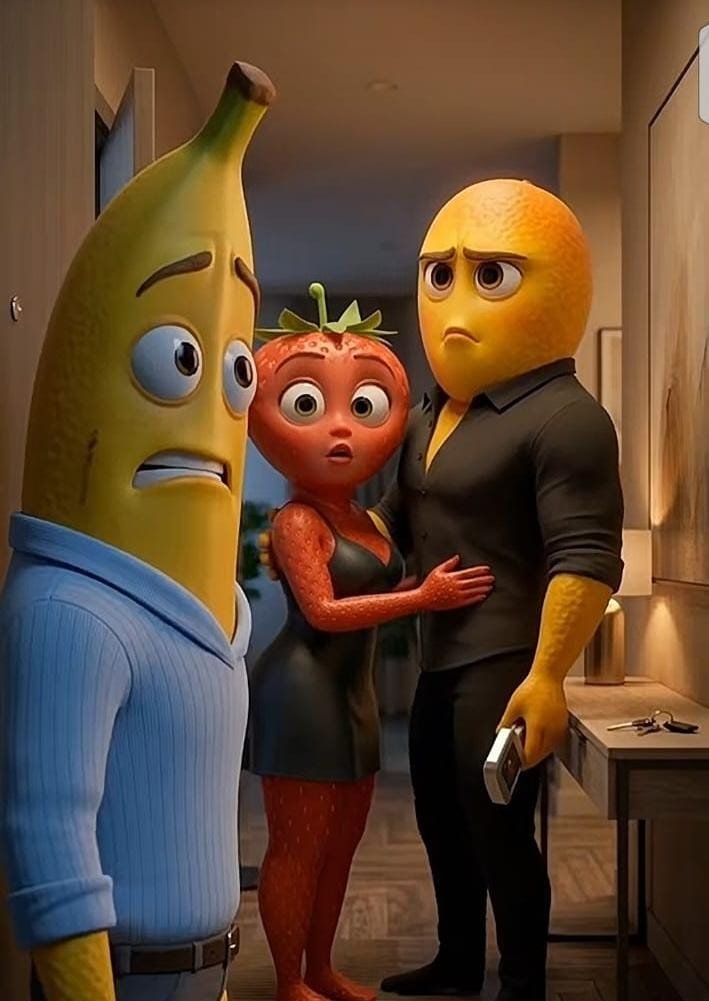
Somewhere on TikTok right now, a banana named Bananito is choosing between a strawberry, a passion fruit and a lime. The villa is tropical. The drama is real. The characters are all AI-generated produce.
This is the world of fruit dramas. Short, absurd, strangely addictive AI micro-dramas where fruits fall in love, cheat, argue and fight for couples’ challenges. The biggest example is Fruit Love Island, a series that exploded in early 2026. Anthropomorphic fruits live together in a villa, go on dates, face elimination and deliver dramatic confessionals exactly like the real Love Island.
Within days of launching, the account behind it racked up millions of followers and hundreds of millions of views. Episodes dropped daily. People stayed up for them. Other accounts quickly joined in. One popular strand features a strawberry having an affair with her eggplant boss. Another follows a mango navigating heartbreak. There are baby fruits, jealous citrus and dramatic boat scenes where someone gets thrown overboard. The plots are ridiculous on purpose, yet the emotional beats land with surprising force.
Why these dramas work
The fruit dramas sit at the perfect intersection of two current obsessions: AI-generated micro-dramas and pure internet absurdity. They take the same formula that made serious AI romance series popular. Short episodes, cliffhangers, heightened emotion and strip away any need for realism.
Because the characters are fruits, the stories can go anywhere. Betrayal feels funnier. Soft romance feels weirder. The stakes somehow feel higher when a pineapple is crying. The visual style is glossy and slightly uncanny, which only adds to the hypnotic quality.
People watch them the same way they watch the more “serious” AI romance dramas: late at night, one episode after another, phone brightness turned down. The difference is that no one has to pretend these stories are deep. The pleasure is in how completely silly and committed they are.
Fruit dramas are part of a larger wave of AI “slop” content. Fast, high-volume, algorithm-friendly stories generated with tools that handle scripts, voices, animation and editing. What started with earnest romance and revenge plots quickly branched into surreal territory. Fruits falling in love is just one of the more successful mutations.
They also reveal something about how we consume stories now. When the characters are bananas and raspberries, the usual rules of taste and respectability disappear. Viewers can enjoy pure melodrama without the guilt or cultural weight that sometimes comes with more realistic AI romance series. It’s escapism with the volume turned up, and the seriousness turned off. The fruits fight. They flirt. They make grand speeches about loyalty. They get eliminated. And tomorrow there will be another episode.
A strange kind of comfort
In the end, the fruit dramas succeed because they ask for so little and give just enough. They do not demand deep analysis or emotional investment. They simply offer a few minutes of colourful chaos where a banana can be heartbroken and a strawberry can start an affair. Perhaps that is the quiet appeal. In a feed full of serious AI romance and real-life noise, these short stories create a small space where nothing is heavy, and everything is temporary.
For more, click HERE to join our WhatsApp channel!





Add Comment