







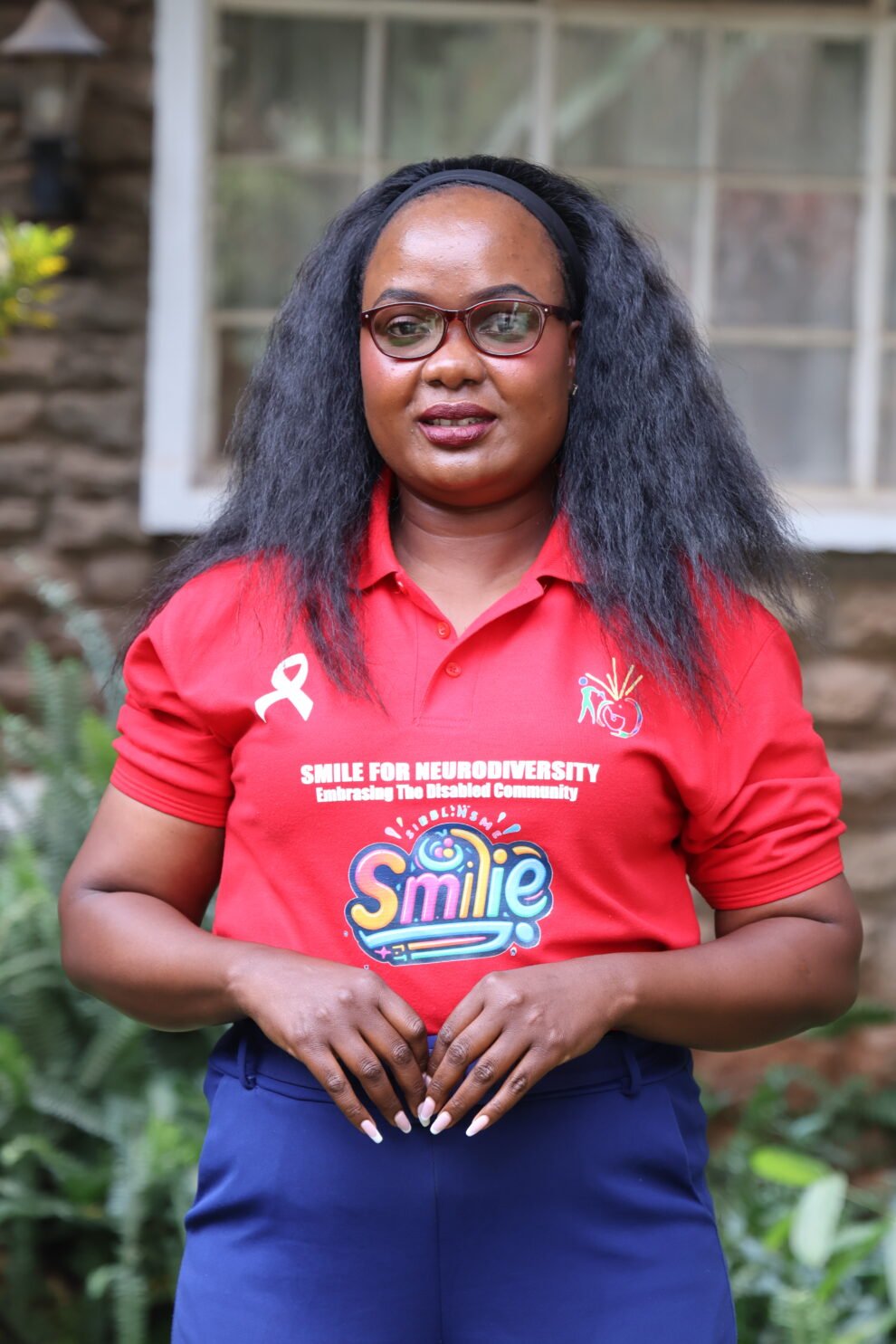
For 16 years, Carol Joseph-Emoyo has raised her son Bahati, who has severe cerebral palsy. His journey from a healthy six-month-old baby to a young man who communicates through his smile inspired her to establish Smile for Neurodiversity, a support platform for families raising children with neurological conditions.
When Carol Joseph-Emoyo looks at her son Bahati, she sees more than the limitations of severe cerebral palsy. She sees a young man whose smile has carried her through some of the darkest seasons of her life.
Bahati was born after what Carol describes as a smooth pregnancy. She attended her antenatal clinics, had her scans and gave birth to a healthy 4kg baby. For the first six months of his life, he appeared to be developing normally.
Then everything changed.
Bahati developed a fever and began crying continuously. Carol took him to a clinic near their home, where he was treated repeatedly for pneumonia and malaria. His condition, however, continued to deteriorate.
It was eventually discovered that Bahati had meningitis.
By the time he was referred to Kenyatta National Hospital, he was experiencing severe convulsions and was taken directly to the ICU. He spent two weeks there, and Carol remained at the hospital for nearly two months during the ordeal.
“When he went to ICU, it was just like reviving him because we had already lost him,” she recalls.
Bahati survived, but he returned home profoundly changed. He had lost the abilities he had previously developed, including head and neck control and the few words he had begun to say.
“At six months, he used to say ‘mama, mama’, but that was the end of the mama, mama. Right now, it’s all smiles.”
A doctor later explained to Carol that the meningitis had caused extensive brain damage. For Carol, however, cerebral palsy was a completely unfamiliar diagnosis. She initially believed it was another illness that would eventually be treated.
It took time to understand that her son’s condition would be lifelong.
Learning to accept a different journey
The first three years were particularly difficult.
Carol describes withdrawing from family, church and social life. She would lock herself in the house and cry, struggling to understand why her life had taken such an unexpected turn.
“I used to hide myself in my house. I used to lock myself inside. I didn’t even go to church. I didn’t interact even with family members because whatever I was seeing was so new to me.”
Eventually, she realised that nothing she did could change what had happened. She had to learn to accept her son’s reality.
“After three years, there is nothing we can do. There is nothing we can change. It’s only acceptance. That is when my journey started.”
For Carol, acceptance was not giving up on Bahati. Instead, it became the beginning of her healing and her ability to advocate for him.
She also had to navigate the emotional impact the diagnosis had on Bahati’s father. While he initially invested heavily in his son’s therapy and medication, he struggled to accept that Bahati might never achieve the milestones they had hoped for.
The family later faced another devastating loss. When Bahati was 10, his father died after battling depression and alcoholism.
Carol believes that greater emotional support could have made a difference.
“If he had someone to talk to, or if someone could have assisted me in taking him to rehab, Baba Bahati could be alive.”
From one mother’s pain to a community
In the years that followed, Carol attended workshops where parents were taught about cerebral palsy and other neurological conditions. Those spaces gave her something she had desperately needed in the early years: understanding, community and someone to talk to.
“They gave me courage. They made me be strong. They made me understand the condition of my son.”
That experience eventually inspired the creation of Smile for Neurodiversity, an organisation supporting parents raising children with neurological and developmental conditions.
The organisation brings together families raising children with cerebral palsy, autism, Down syndrome, hydrocephalus, spina bifida, ADHD and dyslexia.
Carol deliberately chose a broad focus because, in her experience, families dealing with different conditions often face similar challenges: stigma, isolation, financial pressure, lack of information and inadequate support.
Today, she says, about 78 per cent of the parents in the organisation are single mothers.
The organisation has also sought to bring fathers into conversations around disability and parenting. Carol says some fathers remain absent not necessarily because they do not care, but because they struggle with fear, denial and the pressure of societal expectations.
Through advocacy and support, she says, some families have even found their way back to one another.
“For us, that is a win.”
A family built around love
Caring for Bahati is a 24-hour responsibility. He cannot sit, stand, walk or speak independently and requires assistance with his daily needs.
For Carol, this means balancing caregiving with raising her other children, meeting household needs and supporting other parents through Smile for Neurodiversity.
“I’m living two lives. Life for Bahati and my life. Three even, and their lives.”
Yet she says some of her greatest encouragement comes from Bahati’s siblings.
Five-year-old Jabali, for instance, has grown up understanding that his brother needs extra care. Carol recalls him wiping Bahati’s face and helping with his feet from a very young age.
“If you want to see true love, come see the siblings of the special kids. Those guys share true love.”
Carol also speaks proudly of her other children. Her firstborn is studying law at university, while Jabali has already earned recognition for his performance in mathematics.
And then there is Bahati, whose smile remains at the centre of the family.
“He’s made so many families smile through him.”
Giving other parents a reason to step forward
Carol’s work has grown beyond support groups. Smile for Neurodiversity is now advocating for greater visibility and inclusion of children with disabilities.
The organisation is currently running a pageant that gives children with disabilities an opportunity to be seen and celebrated. Some participants will use wheelchairs, while others, like Bahati, have significant physical limitations and cannot sit independently.
Bahati himself will not compete. Instead, he will participate as the current Mr Neurodiversity Africa, handing the crown to another child.
For Carol, that symbolism matters.
She wants parents who once hid their children, as she did during the early years of Bahati’s life, to feel confident bringing them into the public space.
“We were not there those days. But right now, because we are here, we can pick from there and fight for our own kids.”
After 16 years, Carol knows that caring for Bahati is not a journey with an endpoint. It is demanding physically, emotionally, spiritually and financially.
But she has also learned that she does not have to walk it alone.
“Being Mama Bahati is not a walk in the park. Being Mama Bahati is not easy. Being Mama Bahati needs strength. Being Mama Bahati needs a hand from the whole community.”
And through Bahati’s smile, Carol continues to build that community. One parent, one family, and one child at a time.
For more, click HERE to join our WhatsApp channel!



Add Comment