










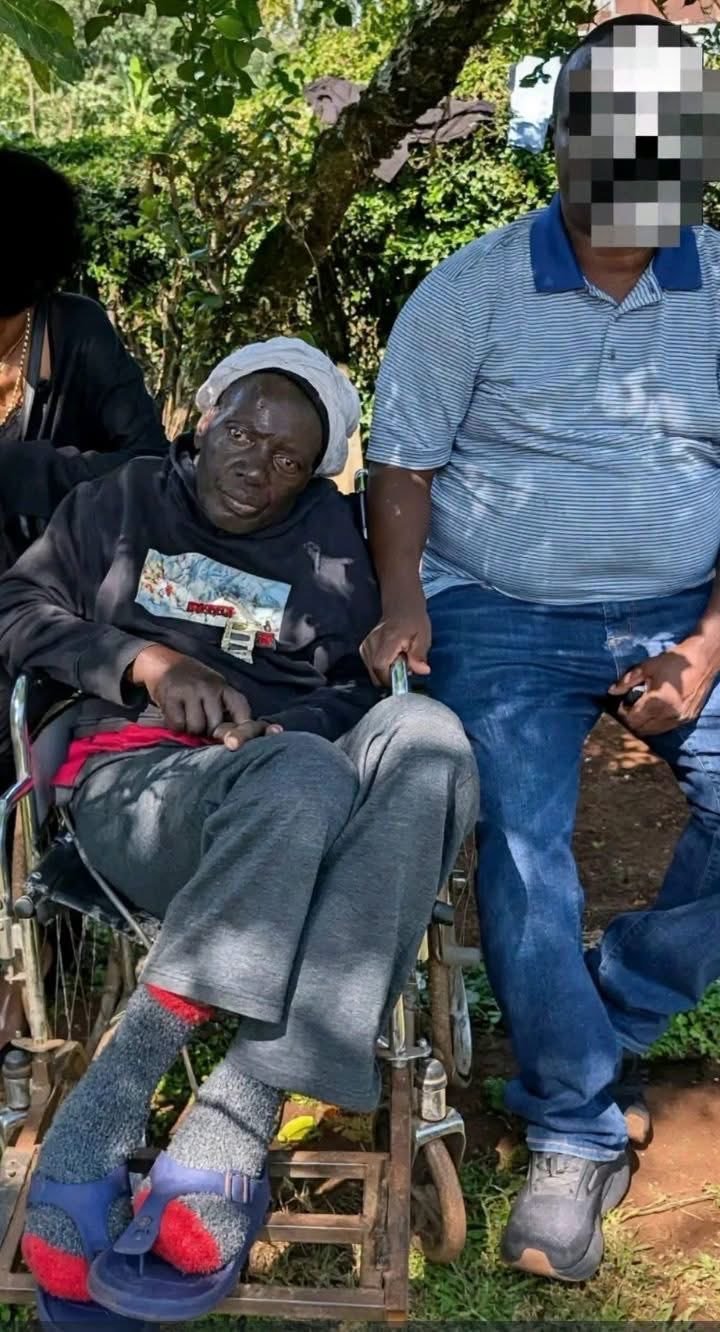
In the red soil of Mwabosire, Nyamira County, the burial of Bosco Kebati did more than lower a coffin. It forced two separate families into the same frame and revealed a quiet Kenyan tragedy: A man can father children in two homes and still leave both feeling half-orphaned
Bosco, a retired Kenya Power engineer, spent nearly three decades living primarily with his second wife, Angelica Akinyi, and their daughters , including content creator Lyndah (Linda Ashley) Kebati. His first wife and children remained in the ancestral landscape, carrying the earlier years and, later, the heavy labour of his final decline. When illness reduced him to dependence, the first family provided the daily care. When death came, the second family claimed the deepest intimacy.
What Kenyan society can learn from Bosco Kebati is not a simple lecture on polygamy or money. It is a rare, uncomfortable look at the emotional architecture of the split Kenyan family, and the invisible price every member pays.
The father who lived in two time zones
Bosco existed fully in one household while remaining largely absent in the other. For the second family he was the man of ordinary days; shared meals, shared conversations, shared years. For the first family he became a fading provider who later returned as a patient needing diapers, support workers, and pooled resources.
This is the peculiar wound of many dual-home arrangements in Kenya. Children inherit the same blood but radically different versions of the same man. One set receives the lived years; the other inherits unfinished obligations and late-stage duty. Neither receives the whole father. The result is not only rivalry between wives, but a quiet, lifelong orphaning of half-siblings who share a surname yet lack a shared story.
The children as lifelong strangers
Lyndah’s public declaration, “We were never family. We will never become family, ” and the first family’s counter-claims about care and exclusion expose a deeper silence. In split homes, half-siblings rarely grow into natural relatives. They grow into competing narrators of the same life.
Without deliberate efforts by the father to weave the children into one extended memory while he is still alive; shared visits, shared celebrations, shared language of belonging, the funeral becomes the first and final meeting of parallel lives. Blood alone does not create family. Consistent presence does. Bosco’s story shows how easily that presence can be divided until nothing whole remains.
In the last chapter, the first family performed the unglamorous work of illness. The second family held the emotional claim of the productive years. Both claims carry weight. Yet the public clash revealed how Kenyan families often turn care into a scoreboard.
In divided homes, the person who feeds, cleans and holds the dying man rewrites the story of the relationship more powerfully than decades of earlier companionship. Families that never plan for this stage; who will care, who will decide, who will be present leave the dying and the living equally exposed. The unique lesson is that care is not a consolation prize. It is the last, most honest measure of belonging.
The inheritance of fracture
When a father lives in two worlds, he often bequeaths more than land or pension. He bequeaths unfinished grief, competing memories, and children who must decide, at the graveside, whether they will continue the distance or attempt the harder work of recognition.
Bosco Kebati’s burial did not invent this fracture. It simply made it visible. Many Kenyan families carry similar parallel lives in quieter ways. The striking truth his story offers is this: a man can provide, love, and even return in illness, yet still leave his children standing on opposite sides of the same grave, each holding only half of him.
Click HERE to join our Whatsapp Channel




Add Comment