





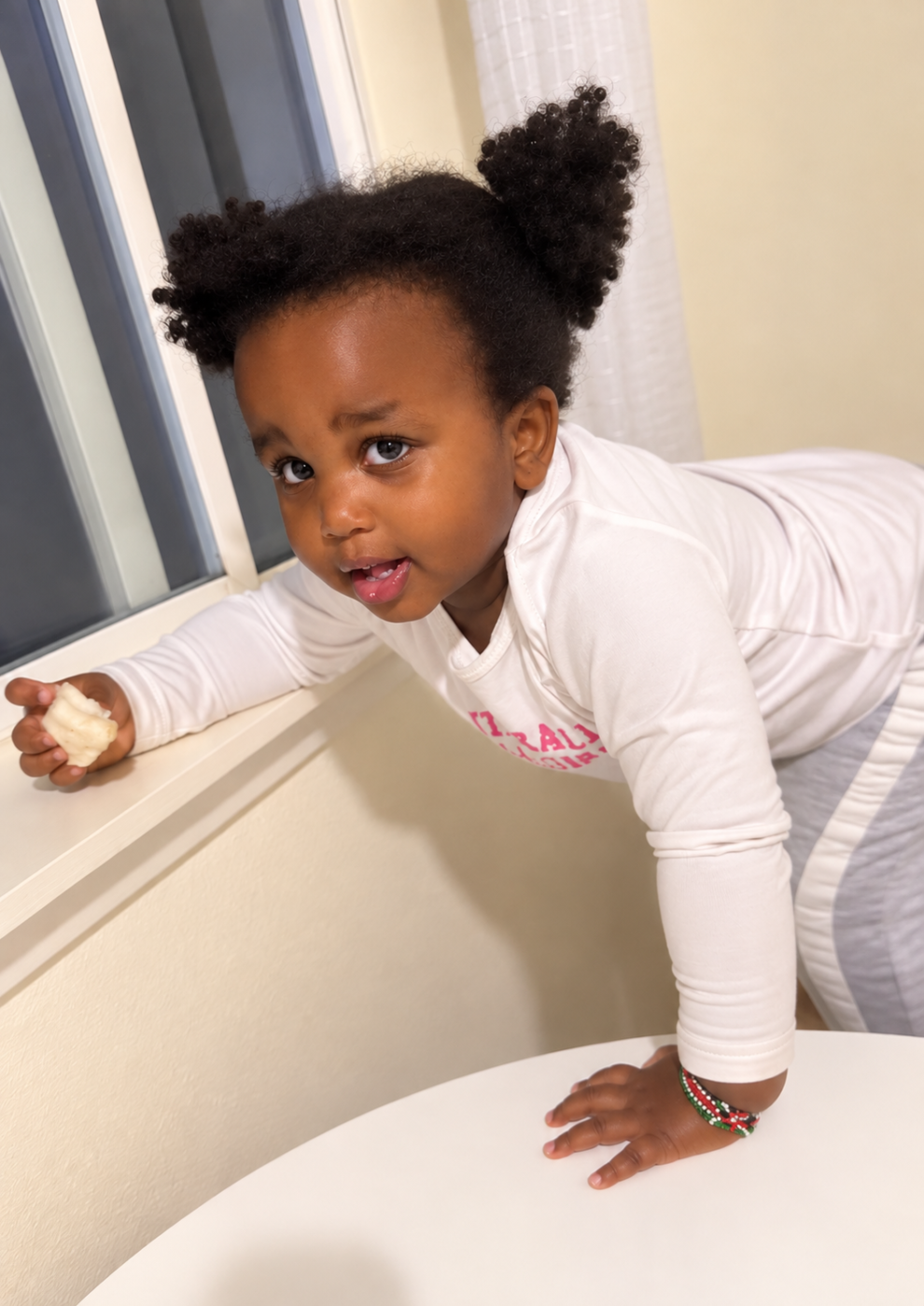
If there is one thing Kiki is not willing to negotiate, it is her ngima. Pizza, pasta or whatever else might be on the menu can wait. The little girl has made her position clear: she wants ugali!
Kiki, an American girl with Kenyan roots, has been winning hearts online through videos shared by her mother, Wamboh Tay. Her enthusiastic demands for ngima, sometimes delivered with the kind of conviction usually reserved for much bigger matters, have turned her into a favourite among Kenyan social media users.
And it is not just about having ugali once in a while. Interestingly, even after eating other foods, Kiki will still ask for ngima. In her mother’s videos, the little girl makes her preference known, leaving viewers amused by her apparent determination to ensure that the Kenyan staple never disappears from her menu.
Her love for the meal has become so entertaining that Kenyans have begun imagining an entire future built around it.
One social media user joked, “Huyu birthday zake asiwai nunuliwa keki…..ugali tu kilo mbili baas,” suggesting that Kiki should forget birthday cakes and receive two kilogrammes of maize flour instead.
Another confessed to having a rather amusing curiosity: “I’ve always wondered what she does with the ngima coz kakipewa tu hivi huwa kanaenda kakiendaga.”
Then came the business-minded suggestions. One commenter observed that Kiki was practically sleeping on money that could be set aside for her college education, describing her as the perfect advert for a leading ugali flour brand sold globally.
Perhaps the maize flour companies should be paying attention!
But beyond the humour, Kiki’s growing popularity has opened up a conversation about African families raising children abroad and the traditions that remain part of their everyday lives.
A Mother’s Joy
Behind the little girl making demands for ngima is a mother enjoying the attention her daughter’s personality has attracted.
Wamboh says watching people embrace Kiki and her love for Kenyan food has been a joy.
“As her mom, it’s been such a joy watching people embrace her personality and love for Kenyan food,” she told ParentsAfrica.
It is a conversation worth having because migration does not necessarily mean leaving one’s culture behind. For many African families, home travels with them in the languages spoken around the dinner table, the music played in the house, the stories told by parents and grandparents, and, perhaps most importantly, the food prepared in their kitchens.
A plate of ugali might seem like an ordinary meal to someone who grew up eating it. But for a Kenyan family living in America, preparing and sharing familiar dishes can also be a way of keeping a connection to home alive.
Food has a unique place in cultural identity. It is experienced rather than simply explained. Children become familiar with particular tastes, smells and meals through repeated family experiences. They may not immediately understand the history behind every dish, but these everyday encounters become part of their childhood memories.
For Kenyan parents, ngima is one such cultural staple. Whether served with sukuma wiki, traditional vegetables, beef stew or fish, it is a familiar presence in many households. It brings people together and carries memories of family meals, childhood and home.
Wamboh states the affection people have shown Kiki has made the experience even more special. And while Kiki may not yet appreciate the conversations her little food obsession is inspiring, her videos have struck a chord with many Kenyans, particularly parents who understand the importance of introducing children to the foods and traditions they grew up with.
SCREENGRAB FROM @WAMBOHTAY on Instagram.
Raising African Children Far From Home
For African parents living in the diaspora, raising children often comes with the experience of navigating two cultures. Their children may be born and raised in countries thousands of kilometres away from their parents’ birthplace, but the family traditions, languages, values and foods they encounter at home can give them a connection to their roots.
Food, in particular, has a way of keeping memories and traditions alive.
For many Kenyan families, ngima is more than just a meal. It is a familiar presence at the dinner table, often served with sukuma wiki, traditional vegetables, meat or fish. It is part of childhood memories, family gatherings and the everyday experiences that make a place feel like home.
Introducing children to traditional meals can therefore become one of the simplest ways parents familiarise them with their heritage.
It is also worth recognising that children growing up in the diaspora do not have to choose between the cultures of their birthplaces and those of their parents. They can embrace the society in which they are growing up while appreciating the traditions that form part of their family history.
Cultural identity is not necessarily passed down through grand gestures. Sometimes, it is found in the language spoken at home, the stories told by grandparents, the celebrations observed by the family and the meals that repeatedly find their way onto the dining table.
Kiki’s enthusiasm for ngima offers a rather entertaining glimpse into this experience. She may be growing up in America, but Kenyan food clearly has a place in her world.
After all, who would have imagined that a little girl’s insistence on having ugali would inspire conversations about African identity, motherhood, diaspora parenting and even potential endorsement deals?
For now, Kiki appears to have one very important message for anyone deciding what goes on her plate: there must be ngima.
And judging by the reactions online, Kenyans are more than happy to oblige their little Ngima Queen.
Watch Kiki’s ngima videos here: @WAMBOHTAY on Instagram.
For more, click HERE to join our WhatsApp channel!



Add Comment