










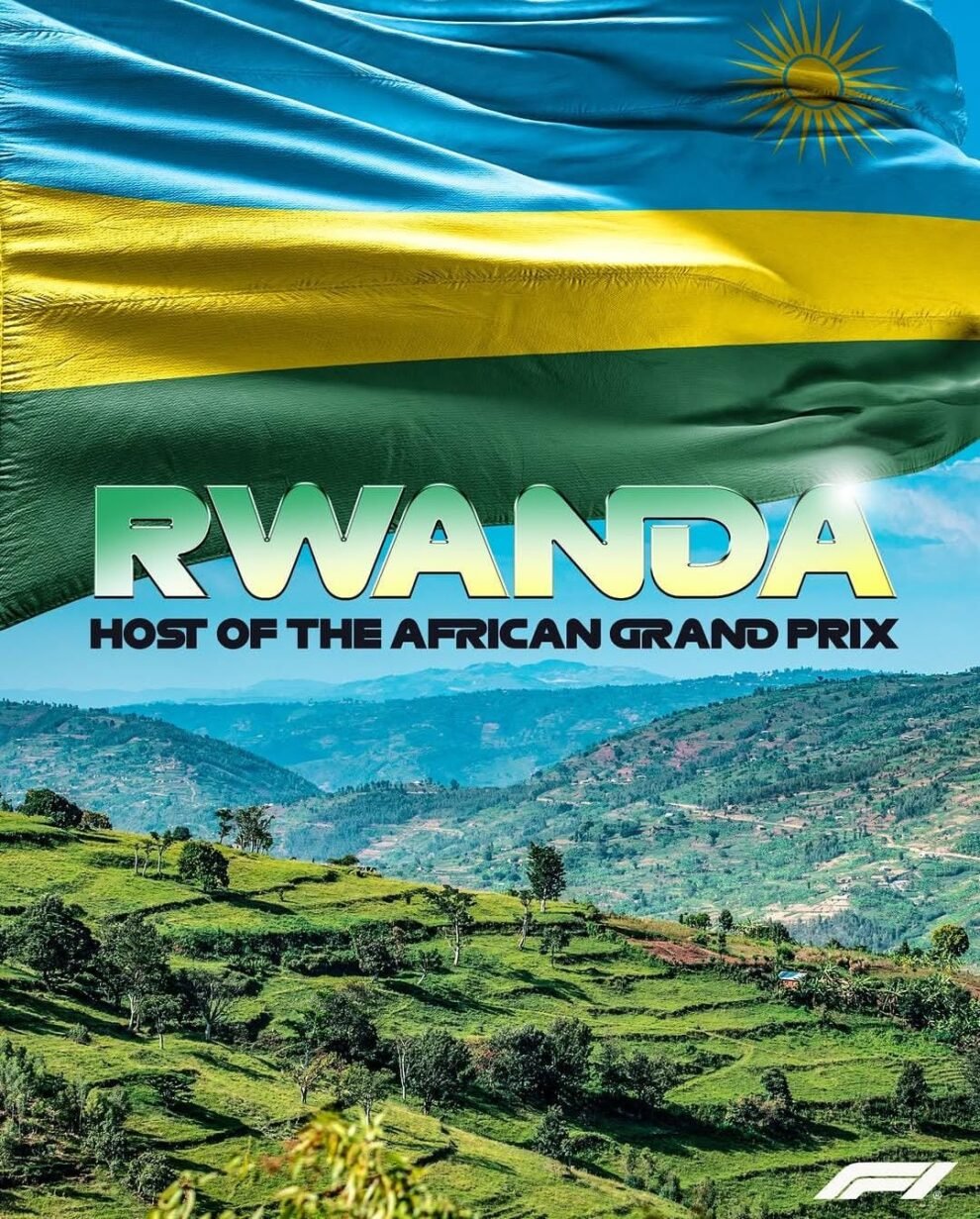
Formula 1 and the Government of Rwanda announced a landmark 10-year agreement for the Formula 1 African Grand Prix, presented by Visit Rwanda. The race is scheduled to join the calendar in the early 2030s once a new purpose-built circuit is completed in Bugesera, approximately 40 kilometres south of the capital Kigali and adjacent to the new international airport under construction.
This marks the first Formula 1 World Championship race on African soil since the 1993 South African Grand Prix at Kyalami.
The significance of this development extends far beyond a single race weekend. It represents a historic reconnection between the world’s premier motorsport championship and a continent of more than 1.4 billion people, home to an estimated 100 million existing Formula 1 fans, many of them young and rapidly growing in number.
For Africa, hosting the African Grand Prix concerns visibility, economic opportunity, inspiration for the next generation, continental pride, and the chance to reshape long-standing narratives of exclusion from global elite sport.
Closing a nearly four-decade gap
Formula 1 has raced on every inhabited continent except Africa for decades. The only previous African hosts were Morocco (a single race at Ain-Diab near Casablanca in 1958) and South Africa (multiple events, primarily at East London and later Kyalami between the early 1960s and 1993). The last race occurred amid the political and logistical challenges of the apartheid era and its aftermath. Since then, Africa has been conspicuously absent even as Formula 1 expanded into new markets in Asia, the Middle East, and the Americas
Lewis Hamilton, the seven-time world champion and the only Black driver in modern Formula 1 history, has long advocated for a return. He has argued that the sport cannot continue adding races elsewhere whilst overlooking a continent that contributes so much to global culture and talent yet receives little in return in elite motorsport. The announcement fulfils a long-held ambition of Formula 1 leadership under Stefano Domenicali to race on every inhabited continent and to engage a major untapped market properly.
Rwanda succeeded where other African bids (including efforts involving South Africa’s Kyalami and proposals linked to Morocco) did not, largely because it presented a cohesive, government-backed long-term plan with clear financial and infrastructural foundations rather than relying solely on an existing circuit or short-term ambitions.
Infrastructure, tourism and economic multipliers
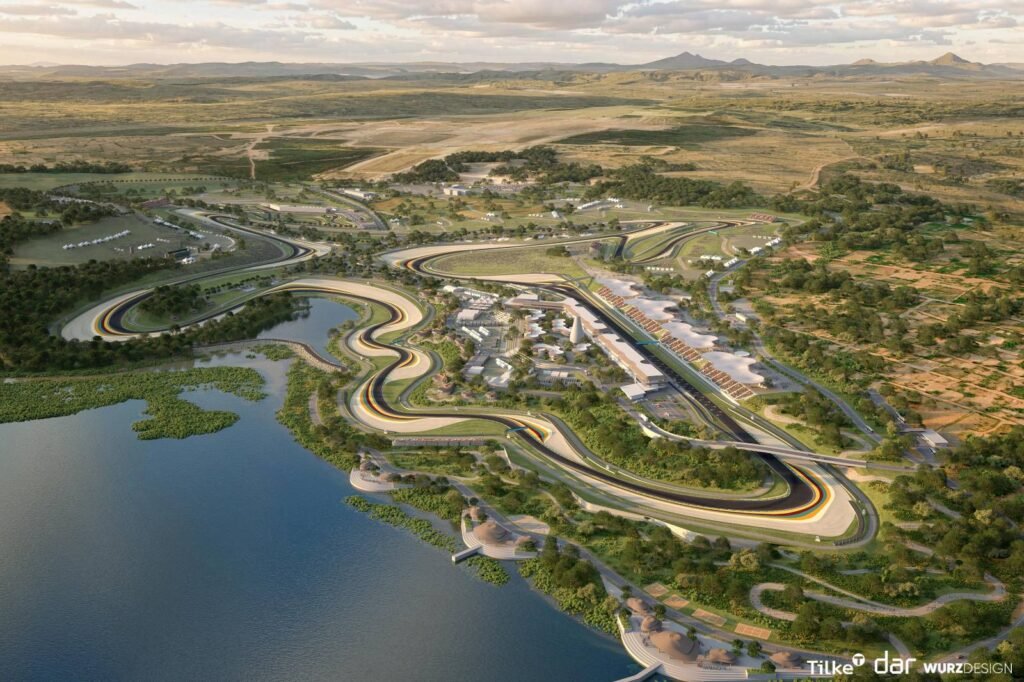
The African Grand Prix is deliberately framed as part of a much larger development project. The new circuit in Bugesera, designed in collaboration with former Formula 1 driver Alexander Wurz’s firm (WurzDesign) and the Tilke engineering group, will be built to FIA Grade 1 standards.
Located next to the new Kigali International Airport, the circuit forms part of a broader complex that includes entertainment, residential, hotel, spa, sports science, and innovation facilities. Rwandan President Paul Kagame emphasised that the aim was never a one-off event;
“The circuit in Bugesera, alongside the new international airport, will bring jobs, skills, tourism and new business to our country and our region for decades to come”
Stefano Domenicali echoed this, describing the deal as creating “lasting economic and social benefits through tourism, investment, skills development and local business growth”
For a country that has invested heavily in positioning itself as a hub for international sport and tourism (hosting events such as the UCI Road World Championships, Basketball Africa League, FIFA congresses, and FIA events), the Grand Prix amplifies existing strategies.
It is expected to generate construction jobs, long-term operational employment, skills transfer in engineering, hospitality, logistics and event management, and a sustained boost to tourism and foreign investment. Rwanda Development Board leadership has spoken of making the return of Formula 1 to Africa permanent and inclusive of the wider continent rather than limited to one nation.
Inspiration, identity and the next generation
Perhaps the deepest meaning lies in representation and aspiration. Kagame noted that Africa’s more than 100 million Formula 1 fans, many of them young people, “deserve to see the sport at home and to see themselves in it: as engineers, technicians, entrepreneurs and, one day, drivers”. Hosting a race under the explicit name “African Grand Prix” rather than a purely national title signals an intentional continental outreach. Officials have described the goal of bringing “other African brothers and sisters to participate” and ensuring the sport “came back to Africa and then never left”
This matters in a sport long criticised for its lack of diversity at the highest levels. A high-profile race on African soil can accelerate grassroots programmes, engineering education, karting and junior series development, and pathways into technical and commercial roles. It offers young Africans tangible proof that elite global sport can occur on their continent and that careers in it are possible. The visibility of the event, broadcast worldwide, also projects a modern, ambitious image of Rwanda and, by extension, of Africa’s capacity to deliver world-class infrastructure and experiences.
Symbolic and geopolitical dimensions
The return carries heavy symbolism. For Rwanda specifically, it continues a post-genocide trajectory of national rebuilding, economic diversification, and international engagement through soft power and events. Critics have raised concerns about “sportswashing” in various host nations over the years; any major sporting project of this scale inevitably attracts scrutiny of governance, human rights, and resource allocation.
Formula 1 and Rwandan officials have countered by stressing measurable long-term economic and social returns and a genuine partnership rather than a transactional weekend.
For more, click HERE to join our WhatsApp channel!



Add Comment