










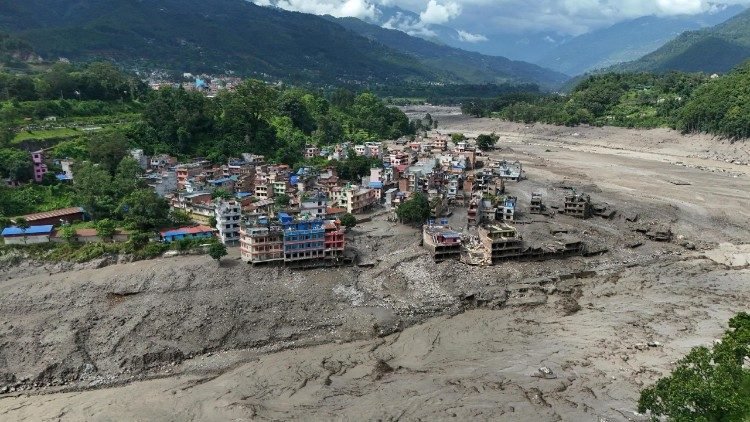
A devastating flash flood and debris flow tore through the Nepal–Tibet border region after a section of a high-altitude glacier collapsed, sending a torrent of water, mud, rock and ice downstream.
The disaster has left at least 165 people confirmed dead and nearly 1,500 missing, with authorities warning that the death toll is expected to rise substantially as rescue operations continue.
The disaster struck at approximately 8:40 a.m. local time on Wednesday, 26 August 2026, when a large section of glacier and rock collapsed high in the mountains. This sent a massive wall of ice, mud, rock and debris into the Lhende River, in Tibet’s Gyirong County, about 20 km northeast of the Nepal-China border crossing.
The resulting temporary dam burst, unleashing catastrophic floods that roared downstream through valleys popular with trekkers and pilgrims. Entire villages, markets, roads, bridges and hydropower infrastructure were swept away or buried.
Given the scale of destruction, entire populated areas wiped out, according to the International Federation of Red Cross and Red Crescent Societies, and the large number of missing persons, the final casualty figures (confirmed deaths plus those still unaccounted for) are likely to exceed 1,500. Experts and officials anticipate that a significant proportion of the missing will ultimately be confirmed among the dead as recovery efforts progress in the coming days.
The floods have also caused extensive damage to infrastructure, including dozens of bridges and nearly 40 km of roads, cutting off communities and hindering relief. This tragedy underscores the growing risks posed by climate change in the Himalayas, often called the “Third Pole,” where glacial lake outburst floods and collapses are becoming more frequent.
As rescuers continue their work, the full human cost of this disaster continues to emerge, with hundreds of families across multiple countries awaiting news of loved ones.
For more, click HERE to join our WhatsApp channel!




Add Comment