










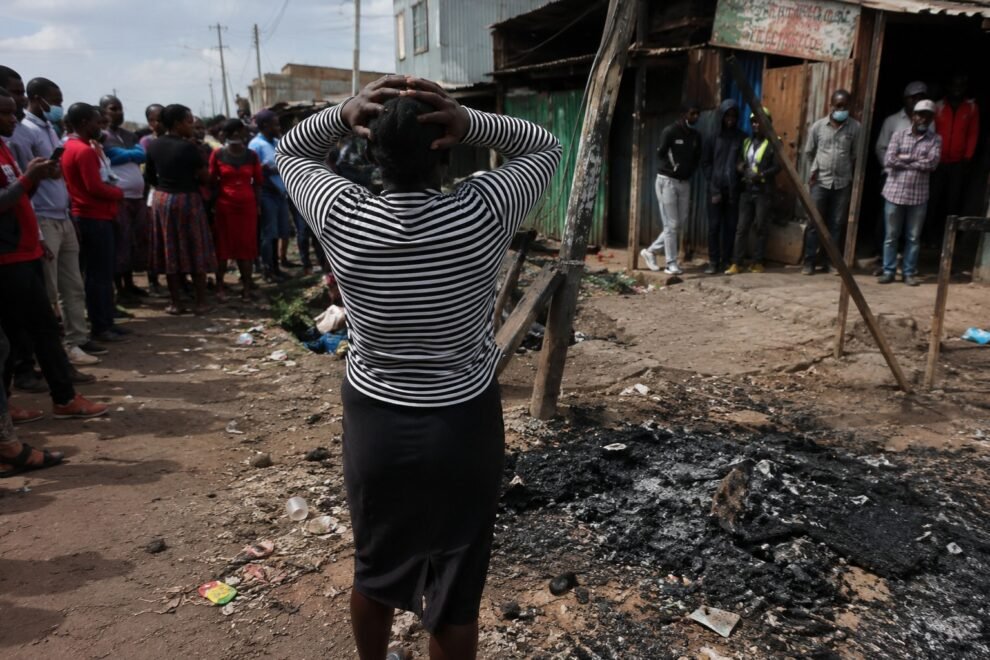
The videos arrive before breakfast. A young man running through a Nairobi estate. A crowd is chasing him. Someone shouting “mwizi!” A circle forms. Phones come out. By lunchtime, another family is identifying a lynched body.
In many estates across Nairobi, especially Utawala, the mood is changing. Residents are exhausted by phone snatching and violent theft. There is anger, fear and a growing belief that justice is something a crowd can deliver faster than a court ever will.
But somewhere behind one of those viral clips is a mother who once celebrated a birthday, attended a school meeting, worried about exam results and perhaps even sacrificed everything to give her son a chance.
One story has lingered painfully in the background: a parent who bought a boda boda for her son, hoping it would become a path to independence. Instead, he drifted into the wrong company, was caught in a theft incident, and never came home.
That is the part social media rarely stays with.
When does a child begin to disappear from the dreams we had for them? Is it with the first bad friend, the first unexplained phone, the first late night, the first time we decide not to ask too many questions? Or is it much later, when a neighbourhood has already decided who deserves mercy and who does not?
Read More: Whole Person Parenting: Raising Children Beyond Academics
This is where the conversation becomes uncomfortable. Are we raising children who can resist peer pressure? Do we know the friends our teenagers spend time with? When a young person suddenly has expensive phones, unexplained money, or keeps odd hours, do we ask enough questions? And when opportunities such as a boda boda, a job, or school are provided, are we also teaching character, accountability, and consequences?
At the same time, we must ask whether mob justice is making our communities safer or simply more brutal. If a crowd can decide who deserves to live or die, what happens when they are wrong? What lesson are children learning as they watch these videos circulate on their phones every day?
Parents cannot solve crime alone. Poverty, unemployment, drugs, and weak policing are part of the story. But parenting is also part of the story. Every burnt body was once someone’s baby. Every grieving mother is a reminder that prevention begins long before a crowd gathers in the street.
Read More: How Moesha Kay Is Sheltering Nairobi’s Vulnerable Children
Perhaps the question is not only how we stop phone snatching. It is also how we stop raising children who believe stealing is worth the risk and communities that believe burning a child is justice.
This is not an easy conversation. Parents are afraid of crime. Parents are also afraid of losing their children to crime. Sometimes those fears exist in the same household.
Perhaps the harder question is not whether the crowd was angry. It is whether we are paying enough attention before our children become the people running from the crowd.
Because every child in those videos is someone’s child. And every viral moment leaves behind a family that must continue living long after the internet has moved on.
For more, click HERE to join our WhatsApp channel!





Add Comment