
16 Days of Activism 2025: End Digital Violence Against Women and Girls
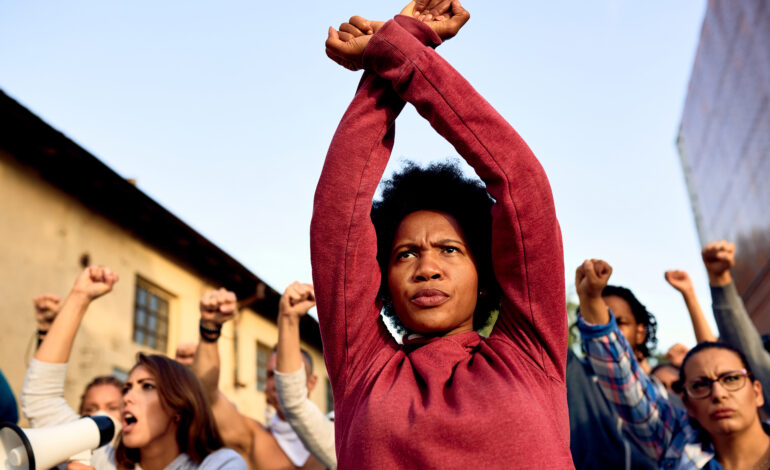

From 25 November to 10 December 2025, the world once again steps into the 16 Days of Activism to End Gender-Based Violence, an annual global push to spotlight, challenge, and dismantle the violence women and girls face every day. But this year hits differently. The focus shifts to a frontier that many still underestimate: the online world.
With the theme “UNiTE to End Digital Violence against All Women and Girls”, the 2025 campaign is a call to wake up to a new reality. One where abuse no longer waits at the door. It follows women into their phones, their inboxes, their timelines, and their digital lives. And in a year that marks 30 years since the landmark Beijing Declaration, the message is unmistakable: digital safety is now inseparable from gender equality.
Much of the foundational insight on digital violence and this year’s 16 Days of Activism theme is informed by guidance from UN Women, the lead agency driving the UNiTE Campaign. Through its research, policy leadership, and global advocacy, UN Women continues to shape the understanding of technology-facilitated abuse and to mobilise stronger action from governments, tech companies, and communities. Its ongoing work remains central to creating safer digital spaces for all women and girls.
A growing crisis behind the screen
For millions of women and girls, digital spaces have become a battlefield. What should enable creativity, community, and opportunity has turned into a tool for harassment, manipulation, and control.
According to UN Women, digital violence shows up in many forms; image-based abuse, cyberbullying, sexually explicit deepfakes, impersonation, online stalking, hate speech, data leaks, and predatory behaviour. The patterns are relentless and often lead to real-world harm.
Survivors report long-term psychological distress, reputational damage, strained relationships, and in severe cases, physical violence or coercion.
Women with public-facing roles such as activists, journalists, politicians and content creators face disproportionate risk. But the weight is heaviest on those already grappling with systemic discrimination, including young women, women living with disabilities, and those from racialised or marginalised communities.
It’s no wonder digital abuse has become one of the fastest-growing forms of gender-based violence globally.
Why the problem persists
Stopping digital violence isn’t as simple as blocking an account. According to the UN Women, the forces working against women’s safety are structural:
- Weak regulation in the tech space leaves loopholes wide open.
- Platforms often lack real accountability or transparency.
- AI tools are creating more advanced forms of manipulation.
- Online anonymity shields perpetrators.
- Cross-border cases complicate justice.
- And the rise of misogynistic online communities normalises violence under the guise of “free speech.”
The result? Survivors often navigate a system that wasn’t built to protect them.
The momentum for change
Despite the challenges, the world is pushing back. Years of advocacy by feminist movements and digital rights groups have finally stirred action.
In 2024, the Global Digital Compact set the first UN-wide safety and AI standards. Member States adopted the UN Cybercrime Convention. The UN General Assembly passed a resolution urging immediate action against digital violence. Global efforts to measure technology-facilitated abuse are now underway. Regions like the African Union and the EU have introduced stronger frameworks to protect women and girls.
The 2025 campaign builds on this momentum and demands that every sector step up.