











When conversations about motherhood come up, there’s often an unspoken assumption: that every woman must experience pregnancy to be “complete.” Yet for couples struggling with infertility, or women facing health conditions that make carrying a child unsafe, this expectation can feel like a closed door. Adoption and surrogacy offer alternative paths to parenthood, but both are often misunderstood, stigmatised, or shrouded in silence.
Adoption in Kenya is legal but still carries cultural resistance. Families sometimes treat adopted children as outsiders, even though the law grants them equal rights. Many couples quietly choose not to adopt because of fears about how extended family or society will perceive the decision. Yet child protection reports consistently show thousands of children living in institutions or in need of permanent homes. Adoption is not just about filling the void of childlessness, it is also about giving children a chance at belonging.
Surrogacy is even more complicated. While Kenya has no clear legal framework, arrangements still happen, often informally and without proper safeguards. Some couples travel abroad to pursue surrogacy in countries with clearer laws, but this option is costly and out of reach for many. For those who attempt it locally, lack of regulation can lead to disputes about custody, finances, and the rights of the surrogate mother.
Religious and cultural narratives add another layer. Some leaders celebrate adoption as an act of compassion, while others frame surrogacy as interfering with God’s plan. These mixed messages leave couples feeling trapped between their desire for children and their fear of judgement.
Imagine if adoption and surrogacy were spoken about openly, without shame or secrecy. Couples who have tried IVF without success would not feel like they had reached the end of the road. Women facing life-threatening pregnancies would know there are other safe ways to build a family. Children in need of stable homes would find love more quickly. And surrogates, too, would have their roles respected and their rights protected.
Kenya could draw lessons from other countries that have created clear, compassionate policies. For instance, regulated surrogacy laws elsewhere establish medical, legal, and emotional safeguards for everyone involved. Similarly, public awareness campaigns have helped normalise adoption, making it easier for children to integrate fully into their new families.
If we are serious about breaking the stigma around infertility, then we must also broaden our understanding of what parenthood looks like. A
doption and surrogacy are not last resorts, they are legitimate, meaningful paths to family. They deserve the same respect and conversation space as fertility treatments.
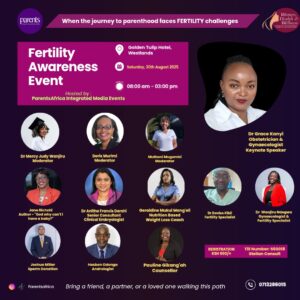
At the upcoming Fertility Awareness Event on 30th August 2025 at the Golden Tulip Hotel, Westlands, adoption and surrogacy will be part of the panels. Doris Murimi of Endo Sisters Foundation will join specialists and policy voices to unpack the realities, address the fears, and spark the honest conversations we urgently need.
Parenthood does not always have to mean pregnancy. What matters most is love, care, and commitment. Families deserve the freedom to choose the path that works for them without stigma.




Add Comment