










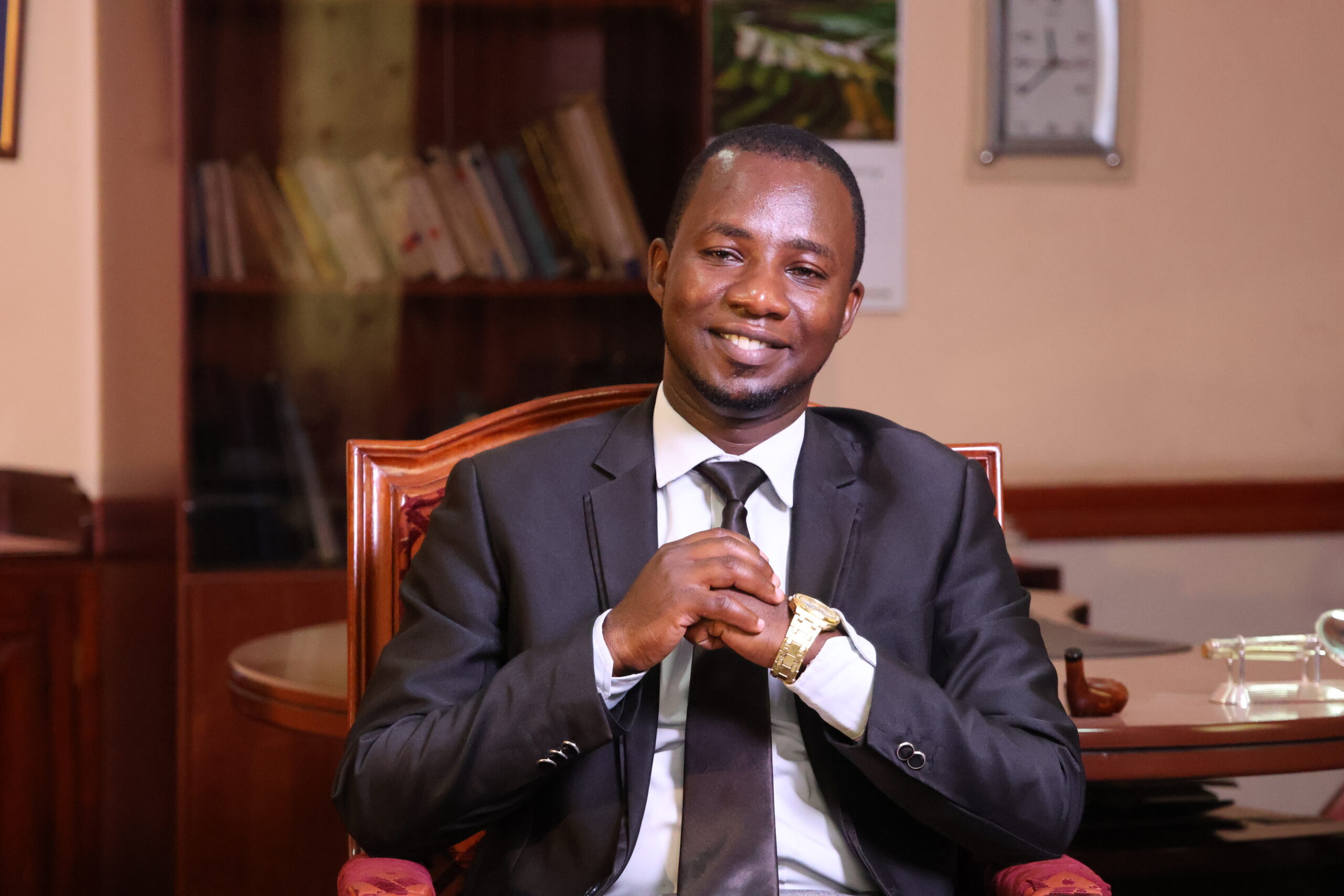
There was a time when hunger, uncertainty and loss were the defining moments of Paul Wangari’s childhood. At nine, he lost his mother, his anchor in a life already marked by poverty. By eleven, he had lost his grandmother, and with no home to call his own, he and his young sister were cast adrift, eventually landing in a children’s home that later threw him out. Today, Paul is a certified counsellor, CEO of Shaping Destinies Consultancy, and an award-winning author who mentors young people across Kenya. But the road from those lonely, uncertain days to a life of purpose was paved with hardship and the rare kindness of those who saw the man in the boy.
In the life of every person, some moments define the trajectory of their future. For Paul Wangari, a young man who has emerged as a beacon of hope for countless youths in Kenya, his journey is one marked by pain and the transformative power of mentorship. Today, he is a certified counsellor, CEO of Shaping Destinies Consultancy, and author of seven books, yet his beginnings were far from promising.
Paul’s early life was shadowed by poverty and loss. Born to a single mother in a small, muddy house, he grew up with limited resources and little guidance. His mother, who had reached only class two in her education, struggled to provide for Paul and his sister, Grace.
At the age of nine, tragedy struck. Paul lost his mother. The young boy found himself grappling with grief, confusion and the harsh reality of life without parental support. His grandmother, elderly and frail, took over their care, but she was unable to provide enough, and soon after, she too passed.
At just eleven, Paul and his sister were left without a home or a stable family structure. Relatives, faced with the practical difficulties of accommodating them, chose to remove them from the family’s remaining property.
“They demolished the little house we had left, showing us that we were not welcome,” Paul recalls. With nowhere else to go, he and his sister were taken by an aunt to a children’s home in Kiandutu, a slum in Thika, Kenya. It was a harsh transition, yet, as Paul notes, sometimes challenges are disguised opportunities.
Life in the children’s home was a cultural shock. Paul and his sister were exposed to a world they had never known: children in neat clothes, beds with mattresses and duvets, and a structured environment prioritising education. Despite the initial bewilderment, Paul embraced this new life.
“The only inheritance I could get here was education. That became my lifeline,” he says. Under the guidance of the home’s founder, a black American woman, Paul began to understand that his future depended on the effort he invested in his education.
Yet, the path to stability was neither linear nor easy. After three years, the children’s home could no longer support older children, and Paul found himself on the streets of Thika Town. For one and a half years, he faced hunger, despair and the ever-present threat of violence.
“I was lying in the corridor, having not eaten for three days, waiting to die,” he recounts. But even in his darkest moment, providence intervened. A woman from his former church recognised him and took him into her home. She provided shelter, food, and support, giving Paul a second chance to pursue education and a better life.
This intervention was pivotal. Paul immersed himself in his studies, breaking family records as the first in his extended family to complete class eight. He progressed to high school, then university, studying counselling psychology, all the while carrying the lessons of discipline and mentorship learned during his formative years.
“God had given me a chance to become more than my circumstances,” he reflects.
Paul’s journey from survival to purpose led him to a career dedicated to transforming the lives of others. After a successful stint in the hotel industry, where he rose from a doorman to a managerial position, he questioned the meaning of his work. Despite financial stability and career success, he felt an inner calling.
“I asked myself, what was my purpose of creation? Was I just here to smile at people in a hotel, or was there something special within me?” he recalls. This introspection guided him toward counselling and mentorship, focusing particularly on the development of the boy child into responsible men.
In 2018, Paul founded Shaping Destinies Consultancy, an organisation committed to impacting and empowering youth through mentorship, counselling and training programs. His work extends beyond the classroom and into communities, schools and churches, guiding boys who, like him, face significant adversity.
He emphasises that the boy child has many enemies, not just external pressures, but internal struggles and societal neglect. Addiction, early delinquency, and the absence of positive male role models often hinder boys from realising their full potential. Through his consultancy, Paul addresses these challenges head-on, helping boys navigate the journey from childhood to manhood.
Paul is also a prolific author. Among his seven books, two have gained significant recognition. Sex and Teenagers addresses sensitive topics often avoided by society, earning him a place among the 100 Best Authors in Africa in 2020. His second book, Becoming A Man, reflects his deepest passion: guiding boys to understand their identity, purpose and societal responsibilities. The book won an award from Kemen in 2023 as the Men’s Advocate of the year, recognising Paul as a leading advocate for male development in Kenya. In it, he explores the psychological, spiritual, emotional, and physical dimensions of manhood, blending psychology, Christianity, and African tradition to provide a holistic framework for growth.
Beyond awards and accolades, Paul’s impact is tangible. He has trained countless young men, offering tools to understand themselves and the world around them. He has shown that with mentorship and intentional support, even boys from the most challenging backgrounds can grow into men of substance.
“Every boy has a seed of greatness. The environment can crush it, or nurture it. What I want to do is ensure that boys realise that greatness within themselves,” Paul asserts.
Paul’s journey is also deeply personal. Having experienced the loss of his mother, the struggles of the streets, and the trauma of displacement, he understands the importance of identity and healing. He has himself undergone therapy to confront and process his childhood traumas, acknowledging that true manhood cannot be achieved without confronting one’s past. This insight informs his approach to counselling and mentorship, allowing him to connect authentically with those he serves.
Family, too, has been central to Paul’s narrative. After years of separation, he reconnected with his sister, ensuring she, too, received education opportunities and support. Today, she is thriving, married and raising her own family. This full-circle journey reflects Paul’s commitment not just to personal success but to the empowerment of those around him.
What stands out most about Paul Wangari is his unwavering dedication to purpose. He left a lucrative career to serve, to guide, and to nurture, understanding that wealth and recognition are secondary to impact.
“When passion and purpose meet, success is inevitable,” he says. His work is a testament to the idea that true achievement is measured not by personal gain but by the lives one touches.
Paul’s story is a reminder that adversity can be transformed into opportunity with resilience, mentorship and divine guidance. It underscores the critical role of community, the need for responsible fatherhood, and the profound impact of education. From the streets of Thika Town to the boardrooms of his consultancy, from the pages of award-winning books to the lives of countless youths he mentors, Paul Wangari exemplifies the power of human potential realised against the odds.
In a society where the boy child often faces neglect, Paul’s journey offers hope and a blueprint. It demonstrates that with vision, perseverance, and support, a child lost in circumstances can become a man of influence, capable of shaping destinies and contributing meaningfully to society. His life is a testament to the truth that while one cannot choose the circumstances of birth, one can choose to rise above them, to mentor, to guide, and to inspire the next generation.
Today, Paul Wangari is more than a survivor; he is a trailblazer, a mentor, a father figure, and a visionary. Through his work, he continues to challenge societal norms, confront systemic neglect, and provide pathways for young men to realise their full potential. His story is not merely about overcoming; it is about becoming: becoming a man, a guide, and a shaper of destinies.
This piece was published in the Dec 2025 Special Festive Issue. Read the whole Special Festive Issue
Want the latest stories delivered straight to you? Click HERE to join our WhatsApp channel.




Add Comment