
Parenting
Should Parents Apologise To Their Children?

Published
2 hours agoon
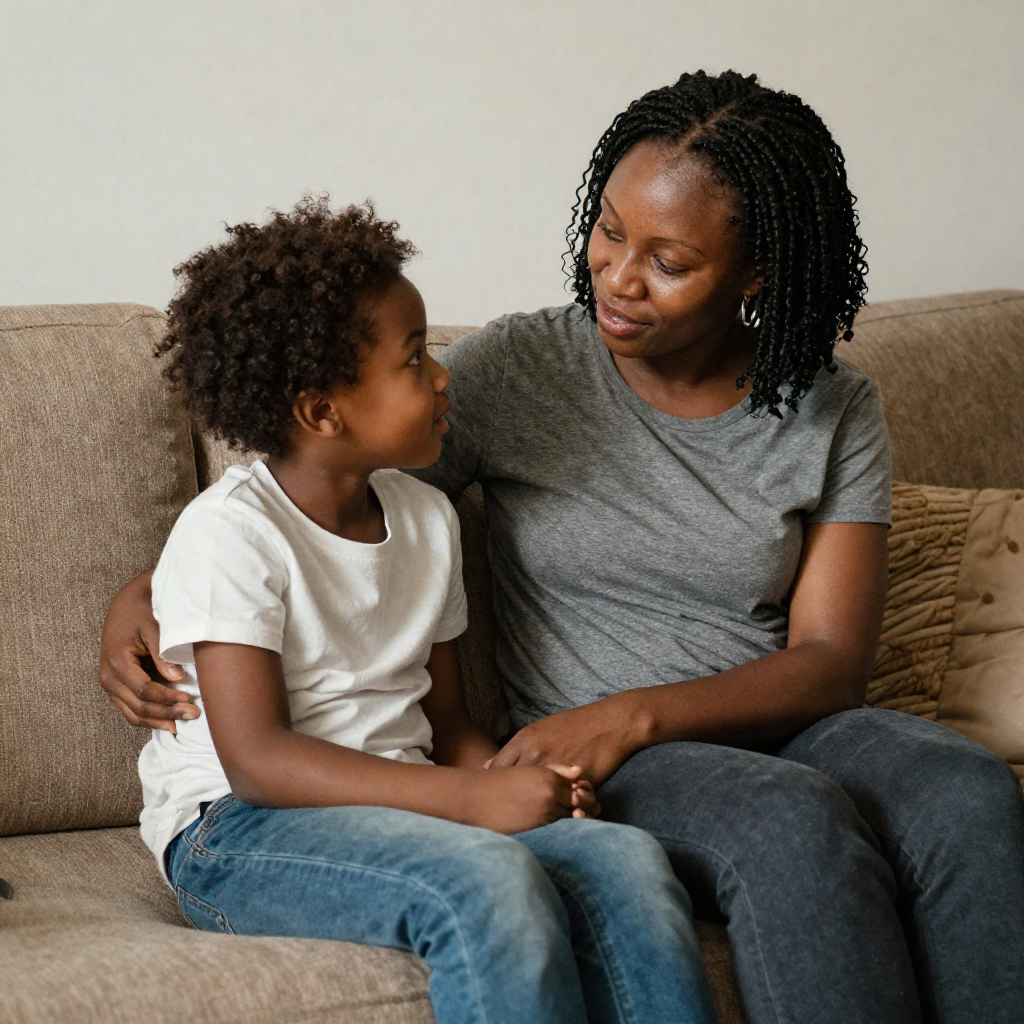
But should the parent say, I’m sorry?
For many families, the answer has traditionally been no. Parents were expected to lead with certainty. Admitting fault was seen as surrendering authority, and authority, many believed, depended on always appearing right. Respect flowed one way from child to parent and questioning that order felt almost unthinkable.
The case for apologising
No parent is perfect. Every father and mother will lose patience, misjudge a situation, or say something they later regret. The question isn’t whether mistakes happen; it is what children learn from what follows.
When a parent apologises for shouting, making an unfair accusation, or breaking a promise, they are not lowering themselves. They are demonstrating one of life’s most valuable lessons: that taking responsibility is a strength, not a weakness.
Apologies also build trust. Children are surprisingly perceptive. Even if they cannot fully explain why they feel hurt, they know when something isn’t right. When those feelings are acknowledged, they feel seen and valued. When they are ignored, children may begin to question their own emotions or believe that their hurt doesn’t matter.
The argument against it
Still, this is not as straightforward as saying parents should apologise after every disagreement.
Some parents worry that frequent apologies blur the line between accountability and authority. If every “no” is followed by “I’m sorry,” children may begin to believe that rules are something to apologise for rather than an essential part of parenting.
Healthy boundaries are not mistakes. A child being denied sweets before dinner, asked to complete chores, or disciplined respectfully for poor behaviour does not deserve an apology simply because they are unhappy.
Others point to culture. In many ways, in African homes, respect for elders is deeply woven into family life. Parents are viewed as guides whose authority provides stability and structure. To some, apologising downward challenges values that have shaped families for generations.
That concern should not be dismissed. It reflects a genuine desire to raise respectful, disciplined children, not simply an unwillingness to admit fault.
Where the balance lies
Perhaps the real question isn’t whether parents should apologise, but what they should apologise for.
A parent should never feel compelled to apologise for setting fair boundaries or enforcing reasonable consequences. Those are acts of love and responsibility.
However, when discipline crosses into humiliation, when frustration becomes shouting, when promises are broken without explanation, or when a child is blamed unfairly, an apology can become one of the most powerful parenting tools available.
It doesn’t weaken authority. It humanises it. Children don’t need perfect parents. They need parents who are willing to repair what has been damaged. In fact, some of the strongest parent-child relationships are not built on the absence of conflict but on the willingness to reconnect after it.
A different definition of respect
Perhaps we’ve misunderstood respect all along.
Respect is not a child remaining silent because a parent can never be wrong. True respect grows where honesty, accountability, and compassion exist together.
When a parent apologises sincerely, they are not giving away their authority. They are showing children that strength includes humility, leadership includes accountability, and love includes the courage to admit when we’ve fallen short.
The next time emotions get the better of you, perhaps the question isn’t, “Will saying sorry make me feel weak?”
Instead ask yourself:
If my child grows into an adult who knows how to apologise sincerely, where do I hope they learned it?
For more, click HERE to join our WhatsApp channel!









You must be logged in to post a comment Login