










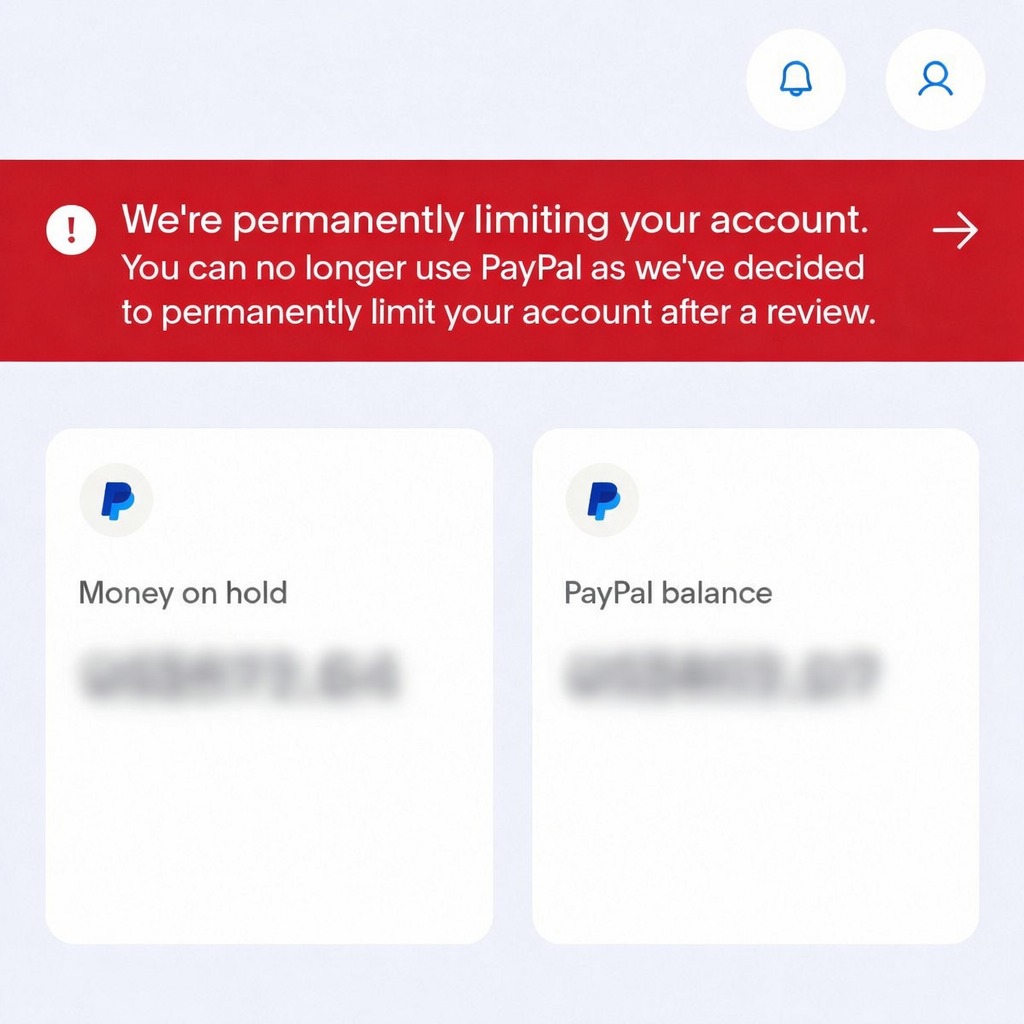
Thousands of Kenyan freelancers, artists, remote workers and small business owners are expressing frustration after PayPal froze funds and restricted accounts as part of stricter global verification requirements aimed at combating money laundering and financial crimes.
The move has seen some users locked out of their accounts, unable to withdraw or transfer money until they submit documents such as work contracts, bank statements and proof of physical address. Those who fail to meet the requirements risk having their funds held for up to 180 days, while some accounts face permanent limitations after prolonged non-compliance.
For many Kenyans who rely on PayPal to receive payments from international clients, the restrictions have disrupted livelihoods and raised concerns about the country’s reputation in the global digital economy.
Why Is PayPal Asking for More Documents?
According to PayPal, account limitations are often imposed to comply with anti-money laundering (AML), counter-terrorism financing regulations and other legal requirements. The company may request identity documents, proof of address, business information and details about the source of funds before allowing transactions to continue.
The increased scrutiny comes as Kenya remains under enhanced monitoring following its inclusion on the Financial Action Task Force (FATF) grey list in February 2024. Countries on the list are subject to greater oversight due to identified weaknesses in preventing money laundering and terrorist financing.
Freelancers Feel the Pinch
The development has hit freelancers particularly hard, with many depending on PayPal as their primary payment platform.
X user @emokaya shared his frustration, claiming that his Kenyan PayPal account faces repeated restrictions despite submitting all requested documents.
“I have PayPal accounts in Kenya and the EU, and the difference is ridiculous.
The Kenyan one gets blocked, restricted, and frozen so often that it is basically useless. Even after sending the documents they ask for and answering their endless questions, the account still gets treated like a crime scene.
Surprisingly, I have never had this problem with my EU account, yet I am the same person operating both accounts.”
He noted that he operates both Kenyan and European Union PayPal accounts, yet only the Kenyan account experiences frequent verification challenges.
Others argue that African users often receive a different experience compared to users in Europe and North America.
Another X user, @BravinYuri, suggested that the challenges could create opportunities for new payment solutions tailored to African users.
“Hopefully, these challenges will lead to better innovations and alternatives that are more African-friendly.”
The Address Verification Challenge
One of the biggest hurdles for Kenyan users is providing proof of address. Unlike many countries where utility bills and official correspondence regularly display residential addresses, many Kenyans do not have such documents readily available.
PayPal accepts documents such as government-issued letters, financial statements, utility bills, insurance statements and payslips as proof of address. However, users have long complained that these requirements do not always align with local realities.
Impact on Families and Young Professionals
For many Kenyan households, freelance income has become an important source of financial support. Parents working remotely, digital creators, software developers and online consultants often depend on international payments to cover school fees, rent and daily expenses.
The latest restrictions highlight the growing importance of financial literacy and compliance in an increasingly global digital economy. Experts advise freelancers to keep proper records of contracts, invoices, bank statements and tax documentation to avoid disruptions when payment providers conduct reviews.
As frustrations grow online, many affected users are exploring alternative payment platforms. However, for now, PayPal remains one of the most widely accepted payment systems globally, meaning thousands of Kenyans may have little choice but to comply with the company’s evolving verification requirements.
While the measures are designed to strengthen financial security and combat illicit transactions, the experience has reignited a broader debate about whether global financial regulations disproportionately burden legitimate users in developing markets.
CLICK HERE to join our Whatsapp channel





Add Comment