










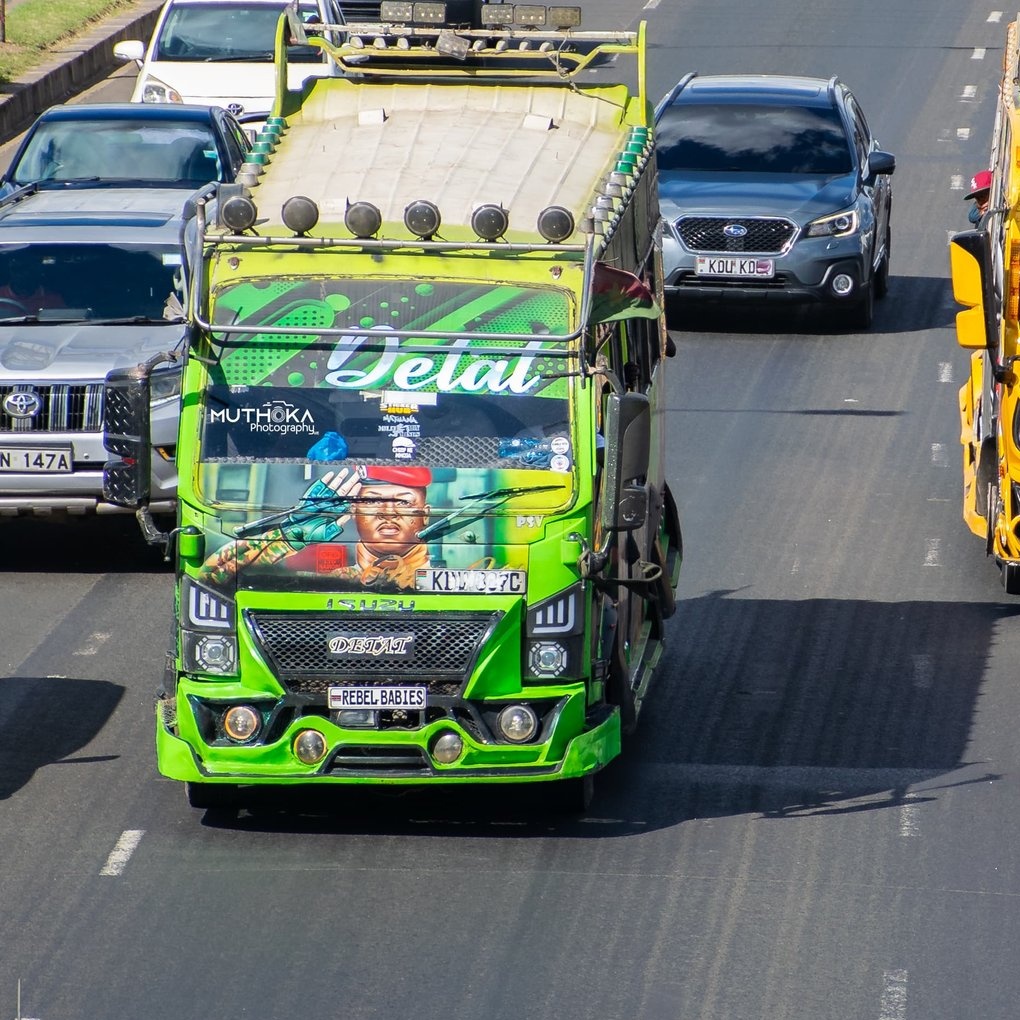
What began as another day on Nairobi’s busy roads ended in heartbreak after the popular matatu “Detat” was involved in a fatal crash along Enterprise Road in the Industrial Area. The accident, which left several people dead and others injured, has once again sparked a national debate about the culture surrounding Nairobi’s famous nganyas and whether entertainment has begun to overshadow safety.
The crash reportedly occurred after the matatu lost control and overturned along the busy stretch of road, triggering emergency rescue efforts and leaving families mourning loved ones who never made it home. Authorities have continued investigations into the cause of the accident.
For many Kenyans, however, the tragedy raises a deeper question: Are we paying enough attention to the risks that come with some of the stunts and driving behaviours increasingly associated with the nganya culture?
The dangerous side of the “Manyoka” culture
Among matatu enthusiasts, the term “Manyoka” is often associated with aggressive manoeuvres, sudden swerves, high-speed driving, and flashy stunts designed to excite passengers and attract attention.
While supporters view it as part of the nganya experience, critics argue that such behavior can endanger passengers, pedestrians, and other road users.
Ian, one of the witnesses and matatu culture fanatics, had to something to say about this ;
Unajua yees manyoka ni mbaya in a way, lakini izi stunts si za kila dere kupiga juu unapata dere amekam na hajai piga any stunts anadai kutambulika very fast saa juu ya hype na kufurahisha jeshi anaamua
Road safety experts have repeatedly warned that public service vehicles should never be driven like performance cars. A vehicle carrying dozens of passengers has a responsibility that extends far beyond entertainment.
When speed, competition, and social media attention become part of the driving culture, the consequences can be devastating.
Not an isolated incident
The ‘Detat’ crash is not the first time a popular nganya has made headlines for the wrong reasons.
Over the years, several highly customised matatus have been involved in accidents, traffic violations, or investigations related to reckless driving.
In many cases, public outrage follows for a few days before attention shifts elsewhere—until another tragedy occurs.
The pattern raises concerns about whether enough is being done to enforce road safety regulations consistently.
Social media and the pursuit of attention
Today’s matatu culture exists largely online.
Videos of stunts, speeding vehicles, and risky overtaking manoeuvres often attract thousands of views on TikTok, Instagram, Facebook, and YouTube.
The more dramatic the content, the more attention it receives.
Unfortunately, this creates a dangerous incentive.
Drivers and crews may feel pressure to maintain an image that keeps their matatu trending, even when that behaviour compromises safety.
The result is a culture where online popularity can sometimes appear more valuable than responsible driving.
Who pays the price?
Behind every road accident are real people.
Parents who lose children.
Children who lose parents.
Friends, siblings, colleagues, and entire families left devastated.
When a matatu overturns, passengers have little control over the outcome. They place their trust in the driver and the transport system to get them safely to their destination.
That trust should never be taken lightly.
Is it time to rethink Nganya culture?
The creativity and innovation within Kenya’s matatu industry are worth celebrating. The industry supports thousands of jobs and has become a unique cultural symbol recognized around the world.
But innovation should not come at the cost of human life.
Perhaps the conversation should move beyond who was at fault in a single accident and focus on a broader question:
Can Nairobi preserve its vibrant nganya culture while prioritising passenger safety?
Many believe the answer lies in stricter enforcement of traffic regulations, regular driver training, stronger accountability for vehicle owners, and a shift away from glorifying dangerous driving behaviours.
Because while music systems can be replaced and vehicles can be repaired, lives lost on the road can never be recovered.
As investigations into the Detat tragedy continue, one thing remains clear: the true measure of a matatu should not be how loudly it turns heads, but how safely it gets passengers home.
CLICK HERE to join our WhatsApp channel




Add Comment