










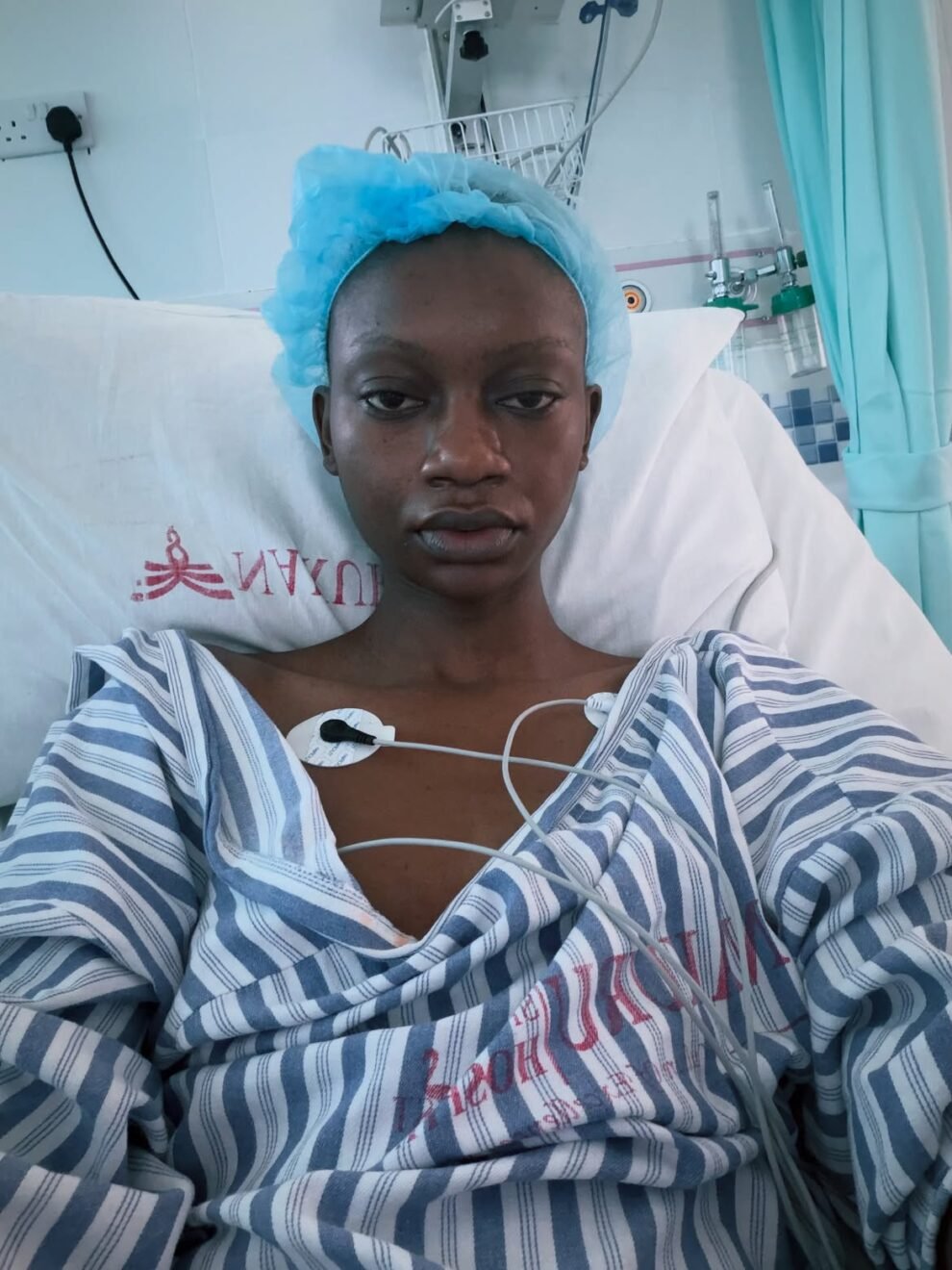
Kenyan content creator Natalie Githinji has opened up about her difficult battle with stage 4 endometriosis, revealing the fear, physical pain and financial strain that have followed what she describes as one of the worst experiences of her life.
In a deeply personal update shared after her recent surgery, Githinji spoke about the terrifying moments before and after the procedure, including the fear of not waking up.
“This part scares me to death… like, what if nikose kuamka?” she said, describing the thoughts that went through her mind while in theatre. She added that she was praying intensely, hoping she would make it through the procedure.
The recovery, she says, has been even harder.
“Finally out of ICU today, now recovering kwa room but not in my best condition yet,” Githinji shared, describing herself as mentally, physically and emotionally exhausted.
Her doctors have now confirmed what she describes as her “worst nightmare.”
Living with severe endometriosis…
Endometriosis is a chronic condition in which tissue similar to the lining of the uterus grows outside the uterus. It can cause severe pelvic pain, painful periods, pain during sex, bowel or bladder symptoms and, in some cases, fertility problems.
The disease is commonly classified into four stages, with stage 4 being the most severe. At this stage, there may be extensive endometriotic lesions, ovarian endometriomas and significant scar tissue or adhesions. In severe cases, pelvic organs can become stuck together, sometimes resulting in what doctors describe as a “frozen pelvis.”
For Githinji, receiving the stage 4 diagnosis was overwhelming.
“When my Doc told me that nimefika stage 4 ata sikulia… I just said ‘Jesus Christ,’ and in my heart I asked God, ‘Naelekea wapi aki Mungu, mimi na the other warriors?” she said.
Rather than simply describing endometriosis as a painful condition, Githinji called it a “monster” and said the description still does not capture what women experiencing the disease go through.
Her account highlights that diagnosis and treatment can be a long and expensive journey, particularly when the disease progresses and requires specialist care or surgery, an issue that many women with endometriosis face.
The cost of fighting endometriosis…
Beyond the physical and emotional toll, Githinji has drawn attention to the financial reality of living with severe endometriosis.
“The financial situation for endometriosis is trash,” she said, calling for greater support for women dealing with the condition.
She is also seeking information on how to support a petition calling for endometriosis and women’s reproductive health to be included under the Social Health Authority (SHA).
Her appeal reflects a broader concern among patients living with chronic reproductive health conditions: the cost of consultations, investigations, medication, specialist care, surgery and recovery can become overwhelming, particularly when treatment is prolonged.
For patients with severe disease, treatment may involve multidisciplinary care, including gynaecologists and specialists in minimally invasive or reproductive medicine. The exact treatment required depends on the extent of disease and the symptoms and needs of each patient.
Turning her platform into a lifeline
Even as she recovers, Githinji has also been candid about the financial pressures surrounding her treatment.
In her message, she invited businesses to advertise on her Instagram Stories as a way of helping her generate income during her recovery.
“If you want to market your business on my Insta stories to support me, please DM me,” she said, sharing a rate of KSh5,000 for the opportunity.
It is an unusually vulnerable glimpse into what illness can mean beyond the hospital bed. For many people, being unable to work during a serious illness can create another layer of financial pressure at precisely the moment medical expenses are increasing.
Githinji’s decision to speak publicly about her experience has therefore opened a conversation that extends beyond her own diagnosis.
‘We seriously need God and the government’
For Githinji, the experience has left her emotionally drained but also convinced that women need greater support.
“We seriously need God and the gov’t for our women. It’s not easy fr! It’s not easy!” she said.
Her message comes at a time when endometriosis remains an important women’s health issue, with many patients describing years of painful symptoms, delayed diagnosis and significant disruption to work, relationships and quality of life.
Her story also serves as a reminder that endometriosis is not simply “bad period pain”. Severe disease can require complex medical intervention and can affect multiple aspects of a woman’s life.
Githinji ended her message with encouragement to other women living with the condition: “To all endo warriors keep on. God ako…”
Now recovering after her time in ICU, Githinji says she is not yet at her best—mentally, physically or emotionally. But by sharing the reality of her experience, she has placed a very personal face on a condition that thousands of women continue to navigate, while raising an equally important question: how can Kenya make treatment and support more accessible to women living with endometriosis?
For more, click HERE to join our WhatsApp channel!



Add Comment