










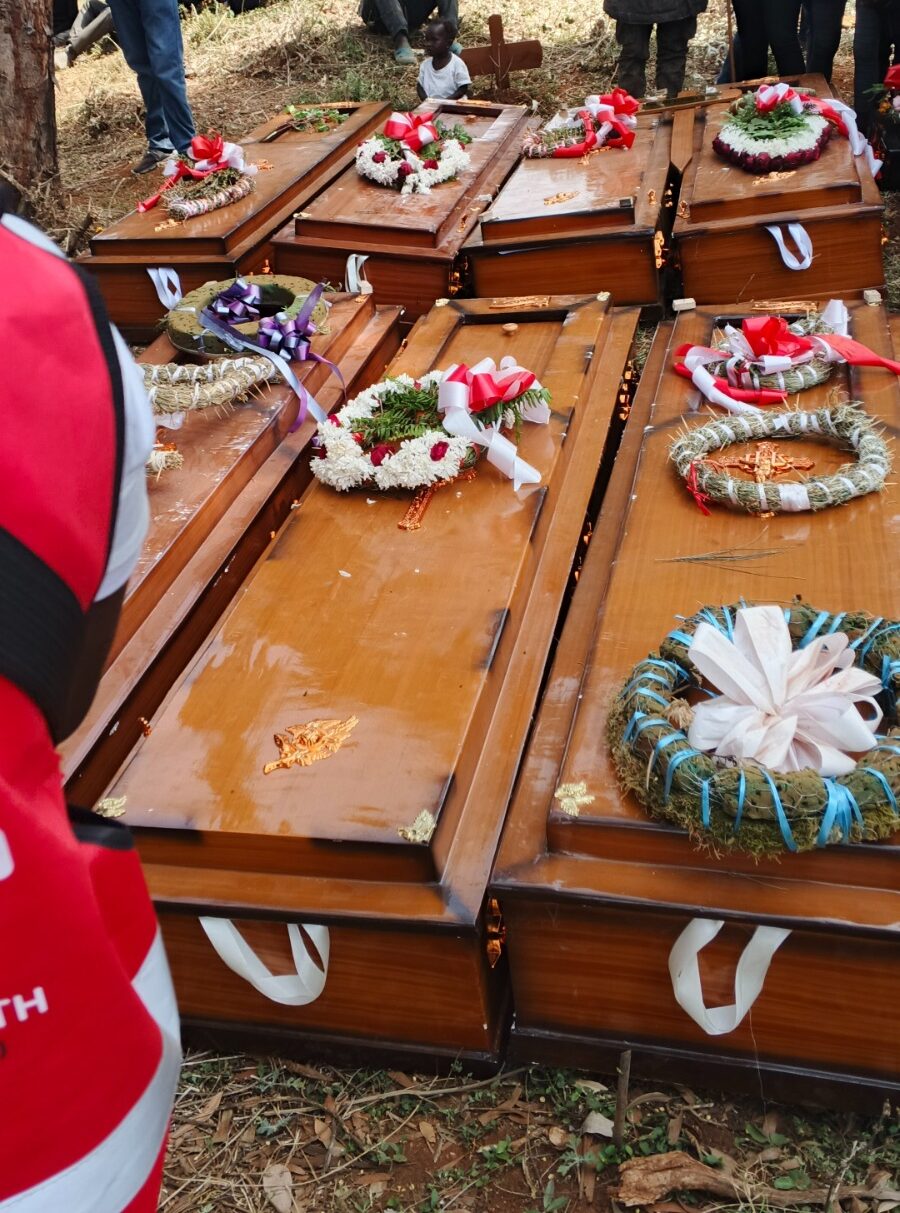
Nine street-connected children were laid to rest in a mass grave at Langata Cemetery in Nairobi on January 29, 2026, following a series of unexplained deaths reported over the past month.
According to authorities, the nine bodies were released for burial after postmortem examinations were completed. Six more children who died under similar circumstances are expected to be buried next week once ongoing investigations are concluded.
The quiet ceremony, attended by a small group of officials, volunteers and street families, underscored a painful reality often hidden in plain sight: the vulnerability of children living and working on the streets. With no known relatives to claim their bodies, the children were buried together, an outcome that has deeply unsettled child rights advocates and members of the public.
While police have not disclosed detailed findings from the postmortems, they confirmed that investigations into the deaths are ongoing. The lack of clear answers has fueled concern among child protection organisations, who are calling for transparency, accountability, and urgent interventions to safeguard children at risk.
“These children mattered,” said a representative from a local child welfare organisation. “Their deaths should not pass quietly. We need to understand what happened and, more importantly, how to prevent this from ever happening again.”
Kenya has thousands of street-connected children, many of whom face daily risks including hunger, illness, exposure to violence, and limited access to healthcare. Experts note that without coordinated support systems, safe shelters, rehabilitation programmes, and family reintegration, these children remain highly vulnerable.
For parents and caregivers, the tragedy is a stark reminder of the importance of community vigilance and advocacy. Child protection is not only a government responsibility; it requires collective action from families, institutions, faith groups, and civil society.
As investigations continue and the remaining six children await burial, advocates are urging authorities to prioritise child welfare reforms and ensure that every child, regardless of circumstance, is protected and valued.
If you encounter a child in distress or at risk, report the case to local authorities or recognised child protection agencies. Speaking up can save a life.




Add Comment