










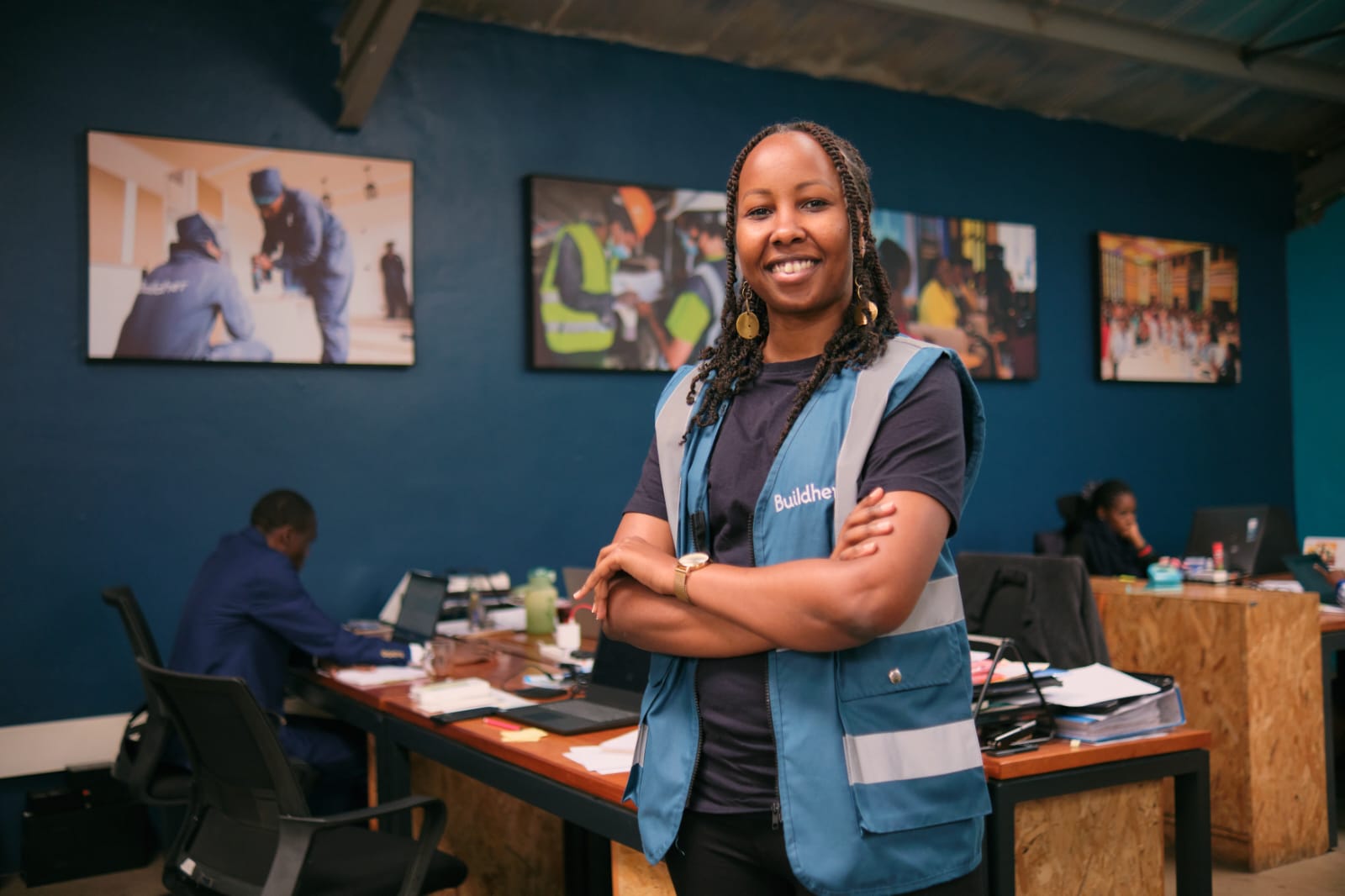
Tatu Gatere’s journey is one of resilience, vision, and dedication to uplifting women in an industry where they’ve often been sidelined. An accomplished architect and CEO of BuildHer, Tatu is pioneering an inclusive shift in Kenya’s construction sector. She talks about her journey and inspiration.
Tatu Gatere is an inspiring architect and entrepreneur who is dedicated to transforming Kenya’s construction landscape and uplifting women within it. As the CEO of BuildHer, she leads a pioneering initiative that equips low-income women with technical skills, opening doors to meaningful careers in the construction industry – a field traditionally dominated by men.
While she brings over 15 years of expertise in architecture, Tatu’s approach is deeply rooted in her values as a mother and family woman. For her, thanksgiving is more than an expression; it’s woven into BuildHer’s mission, where “true thanksgiving lies in empowering others and creating lasting impact.”
With three specialised training tracks, BuildHer has trained over 680 women and achieved an impressive 80 per cent job placement rate. These women now earn an average of Ksh.600 to Ksh.950 per day, significantly increasing their income by two to three times through partnerships with more than 75 employers.
Growing up in Nairobi, Tatu’s early years did not expose her to the economic disparities within Kenyan society. It was only after studying abroad that she returned with a broadened perspective, acutely aware of the socio-economic divides in her own country.
These experiences sparked a powerful question for Tatu: How could her passion for architecture be channelled into meaningful social impact? Her resolve ultimately led her to co-found BuildHer, an organisation dedicated to equipping low-income women with technical skills and the tools needed to succeed in the construction industry.
At BuildHer, Tatu has launched pioneering initiatives such as the BuildHer Shop, a sustainable furniture business run by skilled tradeswomen, and the BuildHer Fundi Desk, which connects employers to highly trained women in the industry.
“It’s about more than just providing skills,” she says, adding, “It’s about fostering self-belief and resilience, enabling these women to thrive despite the obstacles they face.”
Through these programs, BuildHer aims not only to provide training but also to create lasting pathways to economic independence and self-confidence for Kenyan women.
Tatu’s inspiration came not only from her professional journey but also from her family, particularly her mother, whose dedication to community upliftment left a lasting impact on her. She recalls how her mother travelled across Kenya to support small businesses and engage in educational initiatives, teaching Tatu the value of contribution and resilience.
These early lessons were reinforced during her architecture residency in Canada, where she met influential mentors who championed the social impact of design. Upon her return to Kenya, Tatu focused on transforming neglected spaces into community assets in underserved areas like Kibera. This experience solidified her belief in the transformative power of architecture and social impact, especially when shaped by diverse perspectives – including those of women.
The journey hasn’t been without its challenges. Early in her career, Tatu faced gender discrimination, an experience that deepened her commitment to breaking down barriers for women in the construction industry.
“On my first day as an intern, my boss led me to the reception desk and said I’d be his secretary,” she remembers. “Despite my qualifications, it was clear that being a woman somehow defined me for secretarial tasks – a role I hadn’t spent years studying to fill,” she adds.
These encounters fueled her dedication to creating a space where women are respected for their skills and encouraged to thrive. According to Tatu, women bring an invaluable ability to consider diverse perspectives and needs, which enhances the quality and inclusivity of construction projects.
“Women naturally think about the needs of diverse users, and that makes our projects stronger,” she comments.
In recent years, Tatu’s work has received international recognition. She was named among the Royal Institute of British Architects’ “100 Women Architects in Practice,” featured in Dezeen’s “Twenty-Five Women Architects and Designers to Know,” and included in Okay Africa’s “100 Women of Excellence.”
In 2024, she joined the prestigious Clinton Global Initiative Greenhouse Program, a testament to her efforts in scaling impactful solutions to systemic challenges. These accolades reflect the breadth and significance of her work, yet Tatu remains grounded, focused on the day-to-day efforts of building a legacy of empowerment.
Reflecting on her journey, Tatu speaks of gratitude as a guiding force. She is thankful not only for her mentors and supporters, but also for the resilient women who have embraced BuildHer’s mission and transformed their lives. For Tatu, each woman’s success is a powerful affirmation of BuildHer’s impact, a tangible reminder that empowering one person can uplift communities entirely.
As Tatu continues to drive change, she envisions a future where women in Kenya’s construction sector are not just present but thriving as leaders and entrepreneurs. Her advice to young women is simple yet profound: “Dream big, persevere, and surround yourself with those who share your vision.”
Tatu’s story is a powerful reminder of the incredible potential unlocked when spaces that empower women are created – transforming not just industries but lives and futures in the process.
She concludes by declaring: “Empowerment is the ultimate thanksgiving – a way to give back by creating opportunities for others to thrive.”
This article was originally published in Issue 443; click HERE to read the full Issue
For more, click HERE to join our WhatsApp channel!



Add Comment