Multiplying Plastic Containers: Where Do They Come From?

I recently visited a friend of mine and almost found myself judging her. There I was, sitting in her kitchen in the year 2025, sipping juice from a former yoghurt container that had clearly seen things. The plates on the table? Plastic. Multi-coloured. Some printed with cartoon characters. It felt like a throwback to primary school lunch time.
If you’ve been online long enough, you may remember content creator Mungai Eve once saying that using plastics is a sign of “poverty mentality.” A rather bold statement, yes, but on that day, I caught myself thinking about it. Before I let my eyebrows lift any further, my friend explained herself.
She’s a mother of boys.
Not just boys in general, but the kind who break things simply by looking at them. Glasses? Finished. Ceramic plates? Gone like the wind. She told me the only reason she still has anything to serve food with is because plastic survives the war that is raising little humans with endless energy.
And honestly? I got it.
But because I love her, I still gave her a talk. A gentle one. About practicality, yes, but also about home care, health, and creating a space that feels intentional. And lucky for you, you get to experience my brilliance too.
Why Are Plastic Containers Multiplying Like Rabbits?
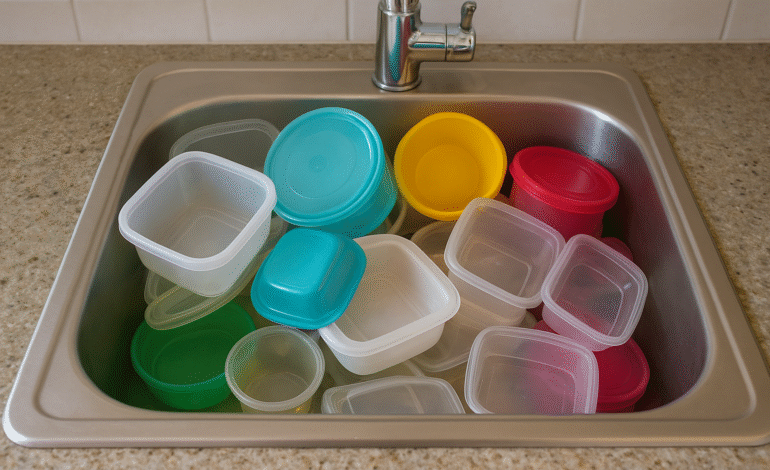
Let’s be honest. We don’t buy these plastics. They arrive.
You buy yoghurt? Boom. Container.
Takeaway from your favorite chicken place? New bowl unlocked.
Auntie sends pilau home after guests left? Congratulations, another plastic plate joins the clan.
Before you know it, you have a bucket of “just in case” plastics under the sink.
The Problem With Keeping All of Them
It’s not just aesthetic. There are real considerations:
1. Health Risks
Some plastics release chemicals, especially when heated. Reheating leftovers in certain plastics can introduce substances that are not good for developing children.
2. Kitchen Clutter
The kitchen becomes harder to maintain. Too many containers = chaos. And chaos leads to frustration. A home environment influences mood more than we realize.
3. The Message to Children
Children learn what a home feels like by living in it. If the message is “we survive, not thrive,” it stays with them.
So What Do We Do? Practical, Non-Judgy Solutions
1. Keep Plastics for Storage, Not Serving
Use them to organize pantry items: beans, flour, spices.
Let them live in the cabinet. Not the dining table.
2. Invest Slowly in Durable Alternatives
You do not need to buy 16-piece dinner sets today.
Start with:
-
Two adult plates
-
Three or four kid-friendly melamine plates (they don’t break easily and still look nice)
-
Two glasses + Two cups
Buying gradually is still progress.
3. Teach Children Responsibility
Yes, things break. That’s life.
But also: children can learn to handle items with care.
It is a training opportunity, not just an inconvenience.
4. Create a “Return to Sender” Policy
If a container arrives from food someone sent, wash it and send it back filled or empty.
This prevents accumulation.
A Home is Not About Perfection, But Intention
My friend wasn’t wrong. She was surviving.
But sometimes we get so used to surviving that we forget we are allowed to choose softness, beauty and order in our homes.
The kitchen is the heart of the home.
It is where we feed the people we love.
It is okay to want it to reflect care.
Not luxury.
Not pressure.
Just care.
So today, open that drawer, that bucket, that cupboard.
Take a breath.
Remove what you do not use.
Keep what serves you.
And step into a more intentional space, one plate at a time.