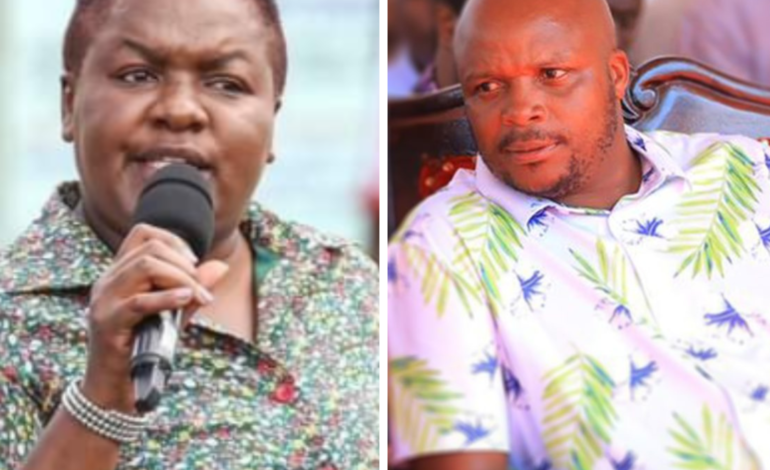

A viral conversation between Kisii Woman Representative Donya Dorice and Lang’ata MP Phelix Odiwuor (Jalang’o) has sparked national outrage after Donya suggested that young girls in Kisii would be subjected to female genital mutilation (FGM) this December, a practice she claimed is used to control girls’ sexuality and behaviour
In the video, Donya Dorice casually shared what she described as a cultural plan in Kisii County, telling Jalang’o:
“Disemba, Kisii tunatahirisha wasichana, ndiyo wasikuwe papapa papapa.”
(In December, we will be subjecting girls to FGM under the belief that it will reduce their sexual desire and prevent them from becoming sexually active)
Her comments, framed lightly and with a hint of humour, quickly took a disturbing turn, implying that FGM is used as a tool to silence girls and control their behaviour. The remarks immediately unsettled Jalang’o, who looked visibly shocked and disturbed.
His response was firm and unfiltered:
“What nonsense is that! That nonsense still happens these days?”
The MP went on to challenge the woman representative to reject not reinforce harmful cultural practices.
“As a woman rep, try as much as possible to suppress that nonsense. Kindly try and stop it. And if you are in charge of subjecting ladies to FGM, we will catch up with you and you won’t like it.”
The exchange ignited heated conversations online, with many Kenyans questioning how an elected leader, entrusted with safeguarding the rights of girls and women, could endorse an outlawed and harmful practice.
FGM remains illegal in Kenya under the Prohibition of Female Genital Mutilation Act of 2011. Beyond its illegality, the practice has long been condemned by health experts, human rights defenders, and child protection agencies due to its devastating physical, psychological, and reproductive consequences.
For many netizens, Donya’s comments were not just insensitive, they were dangerous. Leaders’ words carry influence, and normalizing FGM, even jokingly, undermines decades of advocacy and progress in protecting girls.
This moment serves as a reminder that harmful cultural norms still linger, often disguised as tradition or discipline, and can resurface in spaces where leaders fail to challenge them.
A call for responsible leadership
Children look to their parents, guardians, and community leaders for guidance. When public leaders minimize or promote harmful practices, they reinforce a cycle of abuse that many communities are working hard to break.
It is therefore crucial that leaders:
1. Use their platforms to educate, not endanger
Public officers must speak with clarity and conviction against FGM, helping communities understand the risks and the law. Their language should inspire protection, not compliance with outdated customs.
2. Advocate for safe and empowering traditions
Culture should uplift children, not harm them. Leaders have the responsibility to guide communities toward alternative rites of passage that celebrate girlhood without inflicting pain or trauma.
3. Protect every child, everywhere
FGM is not a seasonal practice to be scheduled; it is a lifelong wound. Leaders must champion stricter enforcement, support community sensitisation, and collaborate with grassroots organisations that rescue vulnerable girls.
4. Model respect for women and girls
Statements that imply girls should be silenced are harmful on their own, even without the act of FGM. Leaders must promote the idea that girls deserve to grow, speak, dream, and challenge the world confidently.
Parents’ role in ending FGM
Parents and caregivers remain the strongest shield against FGM. By teaching girls their rights, refusing cultural pressure, and staying alert during December holiday periods, when FGM cases surge, families can prevent irreversible harm.
At a time when Kenya has made significant strides in protecting girls, comments that hint at normalising FGM should be challenged decisively. Leaders owe the nation more, more wisdom, more courage, and more commitment to safeguarding every child.
The outrage from Kenyans is not just about a conversation; it is a collective voice insisting that the future of young girls must be free from fear, violence, and outdated harmful traditions.
Leaders must choose to stand firmly on the side of progress, protection, and the dignity of every girl.
Find more content like this and much more on our WhatsApp channel: https://whatsapp.com/channel/0029VaeJgVo89inf3IhwHT2t