
Editorial
Understanding Why Adult Kids Are Cutting Off Their Parents


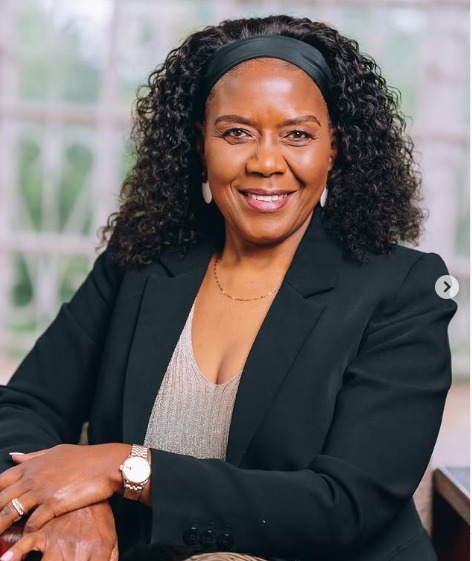
The recent conversation sparked by Kesi Njoro, mother to influencer Lydia KM, has ignited an emotionally charged but necessary debate around adult children cutting off their parents. At the heart of it is a difficult question many families are quietly grappling with: What happens when children grow up and decide distance from their parents is the only way to heal?
For many parents, the idea of a child intentionally cutting them off feels extreme, even disrespectful. Parenting, after all, often involves sacrifice, provision and doing the best one can with the knowledge available at the time. Kesi Njoro’s perspective reflects this sentiment. She argues that many parents did not intentionally cause harm; they simply raised their children based on what they knew, often shaped by how they themselves were brought up. From her view, the solution lies in finding a middle ground, where adult children address issues respectfully and parents listen and acknowledge mistakes.
This perspective resonates with a generation of parents who raised children in environments where discipline was strict, emotions were rarely discussed, and survival often took precedence over emotional nurturing. In many homes, phrases like “I am your parent” ended conversations, and questioning authority was seen as disrespect. Expressions of affection were minimal, and mental health was rarely discussed. For these parents, hearing their children describe childhood experiences as “traumatic” can feel confusing and even hurtful.
However, today’s adult children are growing up in a different world, one that places increasing emphasis on emotional wellbeing, healthy boundaries and open communication. Exposure to conversations around mental health, therapy and childhood development has led many to reassess their upbringing. Some are identifying patterns they believe contributed to anxiety, low self-esteem, fear, or emotional distance. For them, stepping away from their parents is not necessarily an act of rebellion, but a form of self-protection and healing.
This generational shift is creating tension. Parents may feel judged for actions that were once considered normal. Adult children, on the other hand, may feel dismissed when their experiences are minimised or explained away as “that’s how we were raised.” The result is often silence, distance, or in some cases, complete estrangement.
This is where the idea of a middle ground becomes important and necessary.
A healthy middle ground begins with listening without defensiveness. For parents, this may mean allowing their adult children to share painful experiences without immediately justifying their actions. Acknowledging harm does not necessarily mean admitting malicious intent. It simply communicates, “I hear you, and I understand that you were hurt.” That acknowledgement alone can open doors to healing.
On the other side, adult children also carry a responsibility to communicate their feelings constructively. Expressing pain respectfully increases the likelihood of being heard. Conversations framed around personal experiences, rather than accusations, can help reduce defensiveness. For example, saying “I felt afraid when…” instead of “You always…” shifts the discussion from blame to understanding.
That said, it is important to recognise that reconciliation is not always straightforward. Some relationships involve deep wounds, repeated patterns, or environments that remain emotionally unsafe. In such situations, distance may still be necessary. The goal should not be forced closeness, but rather healthy relationships—whatever form they take.
For parents reading this conversation, it may be helpful to reflect on a few questions:
- – Am I open to hearing my child’s perspective, even if it is uncomfortable?
- – Can I acknowledge their pain without feeling like my entire parenting journey is being invalidated?
- – Am I willing to grow alongside my adult child?
Similarly, adult children may also reflect:
- -Have I clearly communicated my feelings to my parents?
- -Am I open to understanding their background and limitations?
- – Is reconciliation possible with boundaries in place?
Ultimately, this conversation is not about choosing sides between parents and children. It is about recognising that parenting does not end when children grow up. Relationships evolve, and so must communication. What once worked in childhood may not work in adulthood.
Kesi Njoro’s call for a middle ground highlights a path forwardone rooted in empathy, accountability and mutual respect. It acknowledges that parents may not have known better, while also validating that children may still carry real emotional wounds. Between those two truths lies an opportunity: families willing to listen, learn and rebuild stronger, healthier relationships.
Perhaps the real takeaway from adult children cutting off their parents is this: healing does not come from silence, distance alone, or defensiveness. It comes from conversations, difficult, honest and respectful ones, that allow both parents and children to understand each other beyond the roles they once held.




You must be logged in to post a comment Login