
What Is Really Happening in Maasai Mara Right Now

The Maasai Mara National Reserve has been at the centre of national conversation following the opening of the new Ritz-Carlton Maasai Mara Safari Camp, a luxury lodge built within the reserve. The development has sparked public debate, but Kenya Wildlife Service (KWS) and county management have released official statements clarifying the situation and the state of wildlife movement in the Mara.
According to KWS, the lodge is built inside a designated low-use tourism investment zone, as outlined in the Maasai Mara Reserve Management Plan 2023–2032. This means the area was already approved for controlled tourism development long before construction began. The location, KWS adds, went through the required environmental assessments and licensing processes.
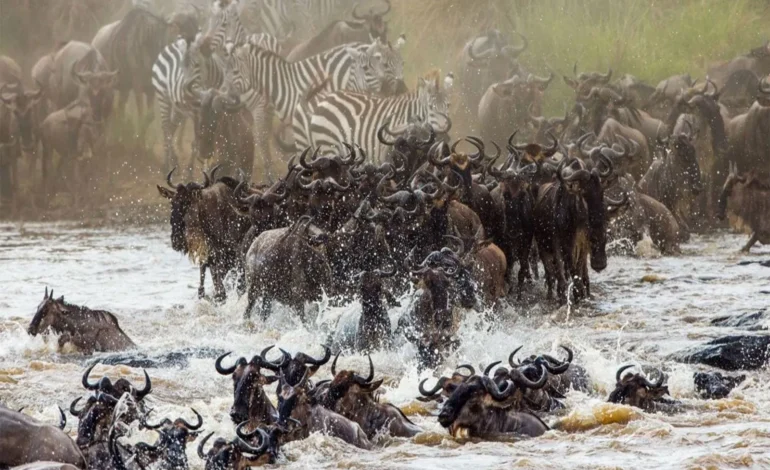
One of the key concerns raised by the public was whether the lodge interferes with the movement of migratory wildlife, especially the wildebeest that cross between the Serengeti and the Maasai Mara every year. KWS has responded by releasing long-term data from over 60 collared migratory wildebeest tracked between 1999 and 2022. The data shows that the animals move across a wide 68-kilometre stretch of the Kenya–Tanzania border, not through a single narrow corridor. Based on this evidence, KWS states that the lodge does not block the movement of wildlife or any known migration pathway.
Wildlife movement across the larger Mara–Serengeti ecosystem remains active, and the annual migration continues to be recognised globally as one of the world’s most significant natural events. Visitors to the Mara are still able to experience the movement of wildebeest, zebras, and other plains animals across the reserve as usual.
While conversations continue around tourism development and conservation, the confirmed facts show that wildlife movement in the Mara remains intact, and the new lodge sits within an area legally earmarked for limited tourism activity. For families planning to visit the Mara, this means the reserve remains open, accessible, and fully functional as one of Africa’s most important wildlife destinations.