










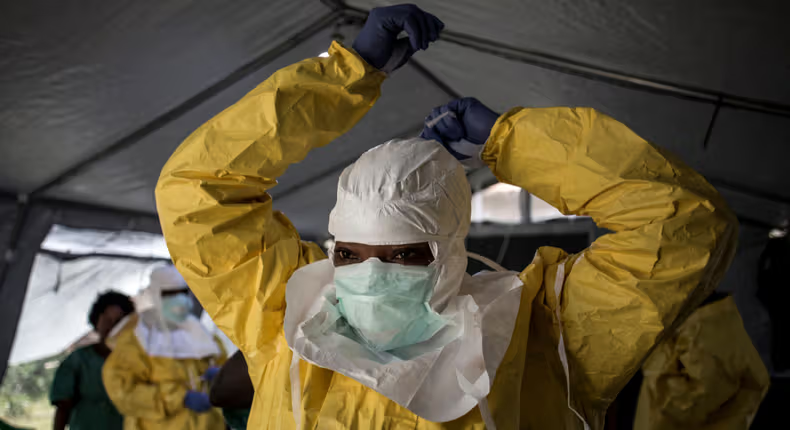
Kenya has heightened surveillance and preparedness measures following the World Health Organization’s declaration of the Ebola outbreak in the Democratic Republic of Congo as a global public health emergency.
The Ministry of Health confirmed that the outbreak, reported in Ituri Province in eastern DRC, poses a moderate risk of importation into Kenya due to regional travel, trade, and population movement across East and Central Africa.
According to the Ministry, laboratory testing confirmed Ebola virus disease in 13 out of 20 samples tested, with preliminary findings pointing to a non-Zaire strain of the virus. As of May 15, 2026, the outbreak had recorded 246 suspected cases and 65 deaths, including four deaths among confirmed cases.
In a public health advisory issued by Director General, Dr. Patrick Amoth, the government said Kenya had not recorded any confirmed or suspected Ebola case as of May 16, 2026.
“The Ministry of Health wishes to assure all Kenyans that, as of today, no confirmed or suspected case of Ebola Virus Disease has been detected within the Republic of Kenya,” said Principal Secretary for Public Health and Professional Standards Mary Muthoni.
Heightened preparedness measures
The Ministry said it is closely monitoring the evolving situation alongside regional and international public health partners.
Health authorities have since moved to strengthen surveillance systems and preparedness mechanisms amid concerns over increased cross-border movement within the region.
The advisory noted that the affected areas in eastern DRC are characterised by significant movement through neighbouring countries, including Uganda and South Sudan, with onward travel connections extending across East Africa, including Kenya.
Counties and health facilities have reportedly been directed to enhance disease surveillance, strengthen infection prevention and control measures, and improve readiness in case of a possible outbreak.
The government is also expected to intensify screening at points of entry, including airports and border crossings, while bolstering rapid response systems and isolation preparedness.
Public urged to remain vigilant
The Ministry is urging members of the public to remain alert and observe public health guidelines while avoiding panic.
Ebola Virus Disease is a severe and often fatal illness transmitted through direct contact with blood or body fluids of an infected person, contaminated surfaces, or infected animals and wildlife products.
Health officials note that individuals infected with the virus do not become contagious until symptoms begin to appear.
Some of the symptoms associated with Ebola include sudden fever, fatigue, headache, muscle pain, vomiting, diarrhoea, and unexplained bleeding.
Regional concern grows
The latest outbreak has raised concern across the region, particularly after Uganda reported an imported Ebola case linked to the DRC outbreak.
The World Health Organization’s declaration has prompted neighbouring countries to strengthen preparedness and surveillance efforts to curb possible cross-border transmission.
Kenya’s response comes amid renewed focus on regional health security and the need for coordinated emergency response systems in East Africa.
Click HERE to join our WhatsApp Channel!




Add Comment