Born of Her, Not Bound to Her: Why I Walked Away From My Own Mother


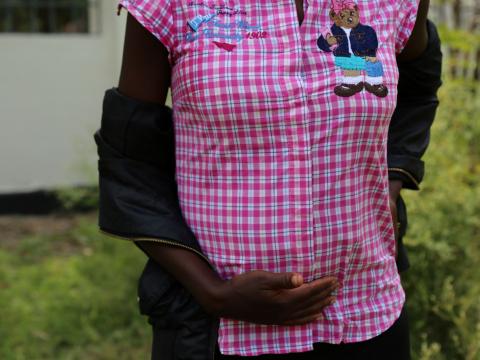
‘Hi, I’m Kelly (not my real name), 34-year-old single mum of three. I have a toxic and narcissistic mother, who only tries to be temporarily nice to me when I’m sending her money.’
There’s a kind of pain that does not leave physical scars, the kind that comes from people who were supposed to love us the most, protect us and even give their lives for us.
Having toxic parents, especially one whose love comes with conditions, is not something that is talked about enough. Why is it that a mother loves you only if you earn it? From twisting and turning into shapes that never seem to be enough, to having to drown in a love that only exists when you obey, Kelly knows it all too well.
Kelly has lived it for years, until she had had enough and did something many people would consider unthinkable: cutting off her own mother to save herself.
After finishing high school, Kelly started hustling, hoping to save enough money to enroll in college in two years. However much she tried, she could not have much to even afford the registration fee, because her mother was always on her neck, demanding money to cater to every necessity she could think of. Even after giving her everything she earned, it was never enough. Her mother belittled and demoralised her every chance she got.
Exhausted and drained, Kelly decided to get married to a guy she was dating then, to finally stop living under the weight of her mother’s control. As it is tradition, her boyfriend came to ask for her hand in marriage. Kelly’s mother vehemently refused, because she had taken Kelly through school, and she could not get married without repaying her every cent spent on her schooling. The boyfriend had nothing else to do in this situation but to leave Kelly at her mother’s mercy, if it ever existed.
Desperate to earn, if not buy her mother’s love, Kelly went back to work and continued giving her mother all her hard-earned money. Of course, it was not enough for her mother to see her as her child, let alone love her unconditionally. Again, she resorted to marriage as an escape.
Having seen that movie before, Kelly knew the script too well, and she did not like the ending. She decided to get married secretly. Her mother only found out about her marriage months later. Even then, her mother’s claws still stretched towards her. She would curse her and her marriage, saying that it was not sacred, and it would never succeed. Every chance she got, she reminded her of how evil she was and how everything associated with her would never prosper. The mother also went to greater lengths of threatening, pressuring, and insulting Kelly’s husband.
The marriage did not last, and like a child whose only refuge is their mother, Kelly went back home with her three kids. At home after a broken marriage, a broken heart, a lactating child and a financial situation that was taking a downward spiral. You would think that Kelly’s mother finally gave her a break and stopped being the weapon formed against her.
She had not even spent a week at her mother’s place when the neighbours started telling her things. Turns out, her mother was using every chance she got with an audience to air out her grievances and disappointment in her daughter. She told anyone who cared to listen how her daughter was a burden, how she is so drained from taking care of her and her kids, and how she thinks Kelly should get a job and leave.
This is the same woman who would demand that Kelly bring shopping worth more than eight thousand shillings whenever she visited her; Kelly did that devotedly. To her mother, foodstuffs worth three to five thousand was equivalent to an empty bag, which, if she brought it, her mother would complain endlessly to her neighbours how her ungrateful daughter visits her empty-handed. It was also required of her not to spend more than three days whenever she visited, because if she extended her stay, according to her mother, that would mean she wanted to eat and use everything she brought and leave her with nothing.
With her mother’s increasing disdain towards everything she did or didn’t do, Kelly left home after a week to work as a housegirl in Nairobi. She had to wean her youngest child sooner than she had wanted; a decision she says was too painful for her, as her baby was still too young and had to breastfeed for a while longer.
Against her better judgment, she left her children with her mother, who she expected to love and take care of them. After all, don’t all grandparents dote on their grandchildren? But how could she love her grandchildren if she never even tried to love her own child, from whom her grandchildren were born?
Kelly was earning seven thousand per month, which she would directly send home to her mother to feed her kids. When Covid 19 hit, Kelly did not feel safe in Nairobi, so she opted to seek refuge in the only place she was supposed to feel safe; her mother’s place. Her mother refused, telling her that if she got on that bus home, she had better know where she would stay with her kids.
Whether Kelly felt safe, whether she was scared for her life, that did not matter to her mother; the only thing that mattered was the Mpesa confirmation message every time Kelly sent money. She continued working and sending money home, and everything was going on smoothly, or so she thought.
One day, she decided to go home without informing her mother of her visit. She could not believe her children’s situation; they were living in the worst of conditions. They never got new clothes, and they would only attend school maybe one week per term, even though public schools in the village are very affordable. Her mother had always nagged her to send money for clothes, school uniforms, school fees, and everything else a child would need. Her inquiry into why her children were livng in such a state was met with insults and abuse.
Having no other options, she decided to take her kids back to their father’s house. Their paternal grandmother gladly took over the role of taking care of the kids, and devotedly so as Kelly tries to rebuild a sense of stability in her life. She is only required to buy the kids’ clothes once or twice a year, while the father takes care of all the other bills.
She was surprised when she never received a call asking for money to take the kids to the hospital, because her mother would call her every week, demanding money to take the kids to the hospital. Kelly’s mother would come up with a new ailment for a different child every other week, just to extort money from her.
She recalls a time when she, together with her brother, decided to build a better house for their mother. Her mother was singing praises about her brother while cursing Kelly for being ungrateful and for giving her nothing. Eventually, she realised that her emotional scars were deeper than any argument could show, and no amount of money would make her mother show her any affection. She finally started to let go of a love that almost broke her, and chose peace over blood.
Her children are now doing okay; physically, emotionally and academically. They are in grades eight, five, and two in school. She is far from healing from all the emotional trauma she had suffered, but she is grateful that now, she has peace of mind. She is proud that she can now afford to get her hair done and get herself new clothes; a luxury she only dreamt of.
Kelly, currently working on finding her footing, hopes that she can live with her kids and take care of them as a mother should. She hopes to raise her children with so much love that they never question their self-worth like she had for the longest time.
Her mother still calls her to remind her how worthless and ungrateful she is as a daughter, but Kelly decided not to listen to her, only answering her phone calls whenever she feels like she should. She still sends some money home, but now on her own terms and in her own time.