
Cover Story
Usawa Gender Report 2026 Highlights Inequality in Girls’ Education in Kenya
According to the report, girls’ schools remain significantly under-resourced, with fewer science laboratories, limited computer lessons, inadequate library facilities, and fewer examinable subjects.

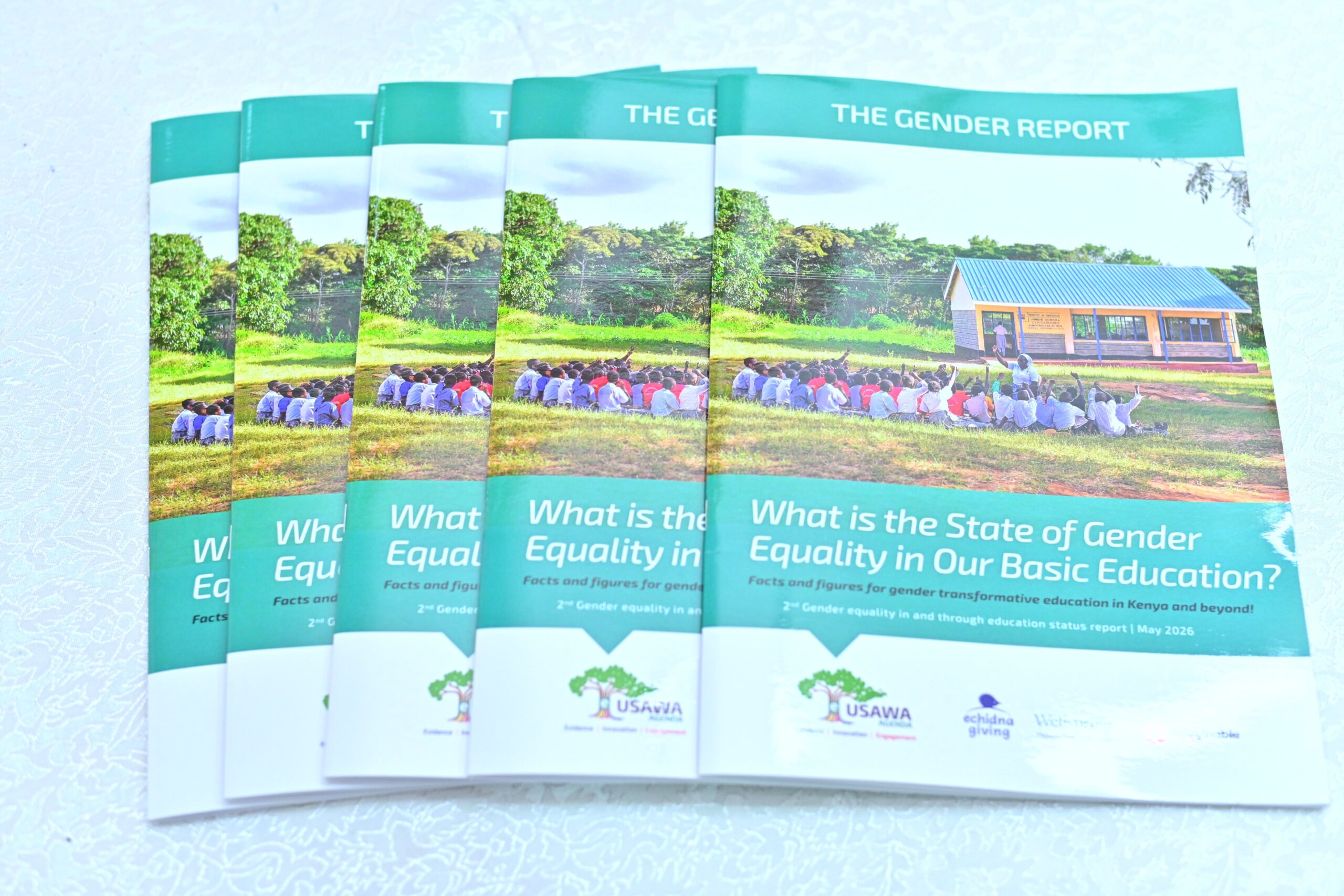
A new report by Usawa Agenda has painted a troubling picture of the barriers still standing between thousands of Kenyan girls and quality education. Released on Tuesday, 12th May 2026, the Gender Report reveals how poverty, stigma, unequal school resources, and systemic neglect continue to push girls, particularly those from poor, refugee, and marginalised communities, out of classrooms and away from opportunity.
The findings, presented by Ms. Claudia Lagat, Assistant Program Officer for Policy Engagement at Usawa Agenda, show that despite years of conversations around access to education, girls’ schools continue to operate at a disadvantage compared to boys’ schools.
According to the report, girls’ schools remain significantly under-resourced, with fewer science laboratories, limited computer lessons, inadequate library facilities, and fewer examinable subjects. Senior boys’ schools were also found to be generally more established than senior girls’ schools, widening the gap in learning opportunities and academic exposure.
Poverty, Refugee Status, and the Weight of Exclusion
The report further highlights how structural and social factors continue to determine whether a child remains in school. Children from female-headed households are more likely to be out of school, while refugee communities face even greater challenges, with girls carrying the heaviest burden of exclusion.
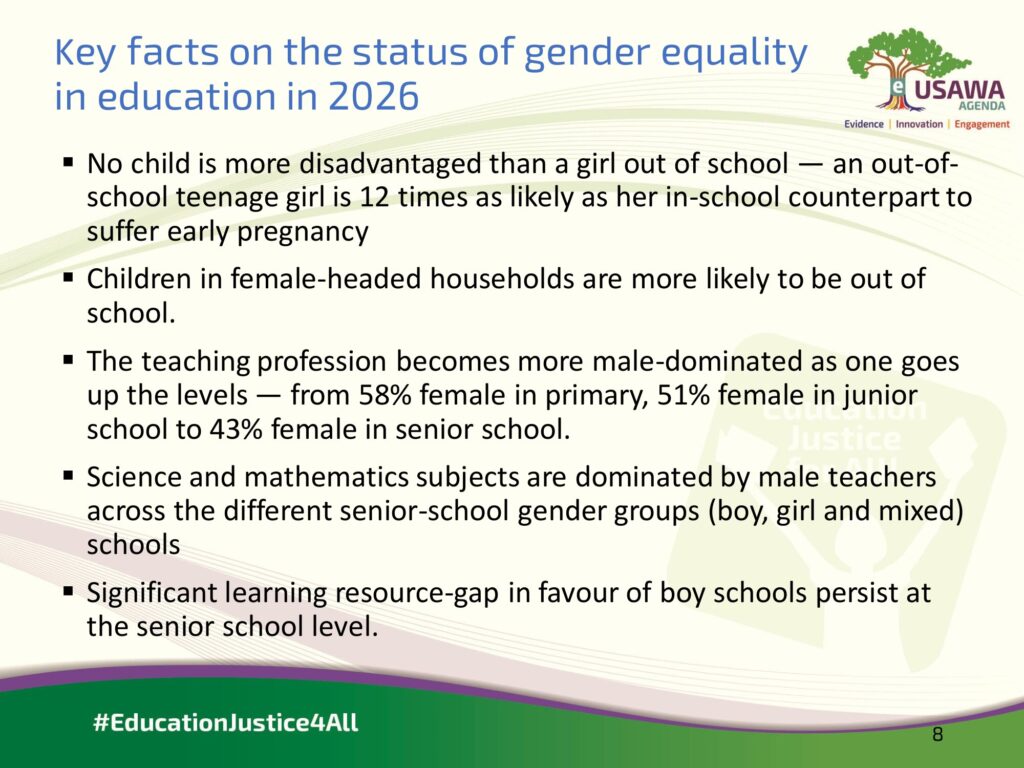
Education levels within households also play a major role. A child living in a household headed by an adult without formal education is nearly ten times more likely to be out of school compared to a child whose household head holds at least a degree. The report identifies low education levels among household heads as a significant contributor to school dropout rates.
Disability remains another major concern within the education system. The findings indicate that children living with mental disabilities are more likely to be excluded from school. Boys with disabilities were found to be marginally one per cent more likely to be out of school than girls with disabilities.
The Missing Facilities Behind the Attendance Crisis
Beyond access to classrooms, the report draws attention to the conditions girls face within learning institutions. Although many primary schools provide sanitary towels, girls continue to lack adequate changing rooms and proper menstrual hygiene facilities. The absence of these basic necessities affects not only attendance, but also girls’ comfort, dignity, confidence, and participation in learning.
The report also points to leadership imbalance within schools. Girls experience diminishing access to role models as they move to higher levels of education due to male dominance in school leadership positions. In addition, girls’ schools are more likely to be sponsored by religious institutions compared to boys’ schools.
Teenage Pregnancy and the Cost of Stigma
Teenage pregnancy continues to emerge as one of the biggest threats to girls’ education. According to the findings, out-of-school girls are 12 times more likely to become pregnant than girls who remain in school. Yet even after pregnancy, returning to school remains difficult for many girls due to stigma and lack of support.
The report identifies stigma as the main obstacle preventing teenage mothers from resuming their education. School administrators also cited lack of parental support as one of the greatest challenges in efforts to retain young mothers in school.
Calls for Action Beyond Policy Promises
Stakeholders are now calling for deliberate interventions and stronger policy commitment to address what the report describes as systemic failures within the education sector.
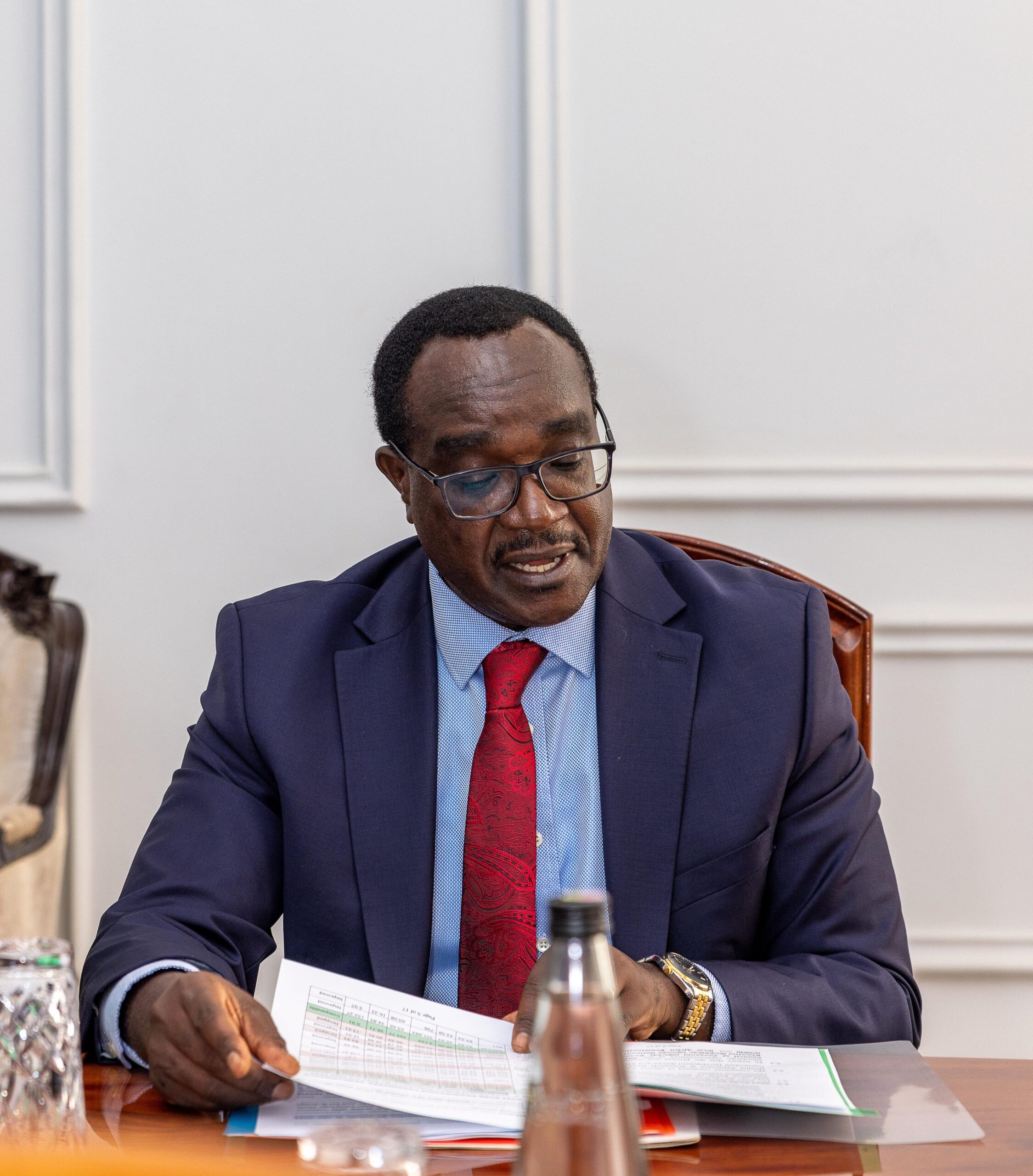
According to Hon. Abdul Haro, Member of Parliament for Mandera South and a member of the National Assembly Education Committee, evidence-based policymaking is essential as it replaces assumptions with facts, highlights areas where progress has been made, identifies gaps that require urgent attention, gives voice to vulnerable communities, and strengthens accountability within the education sector.
Click HERE to join our WhatsApp Channel!







You must be logged in to post a comment Login