






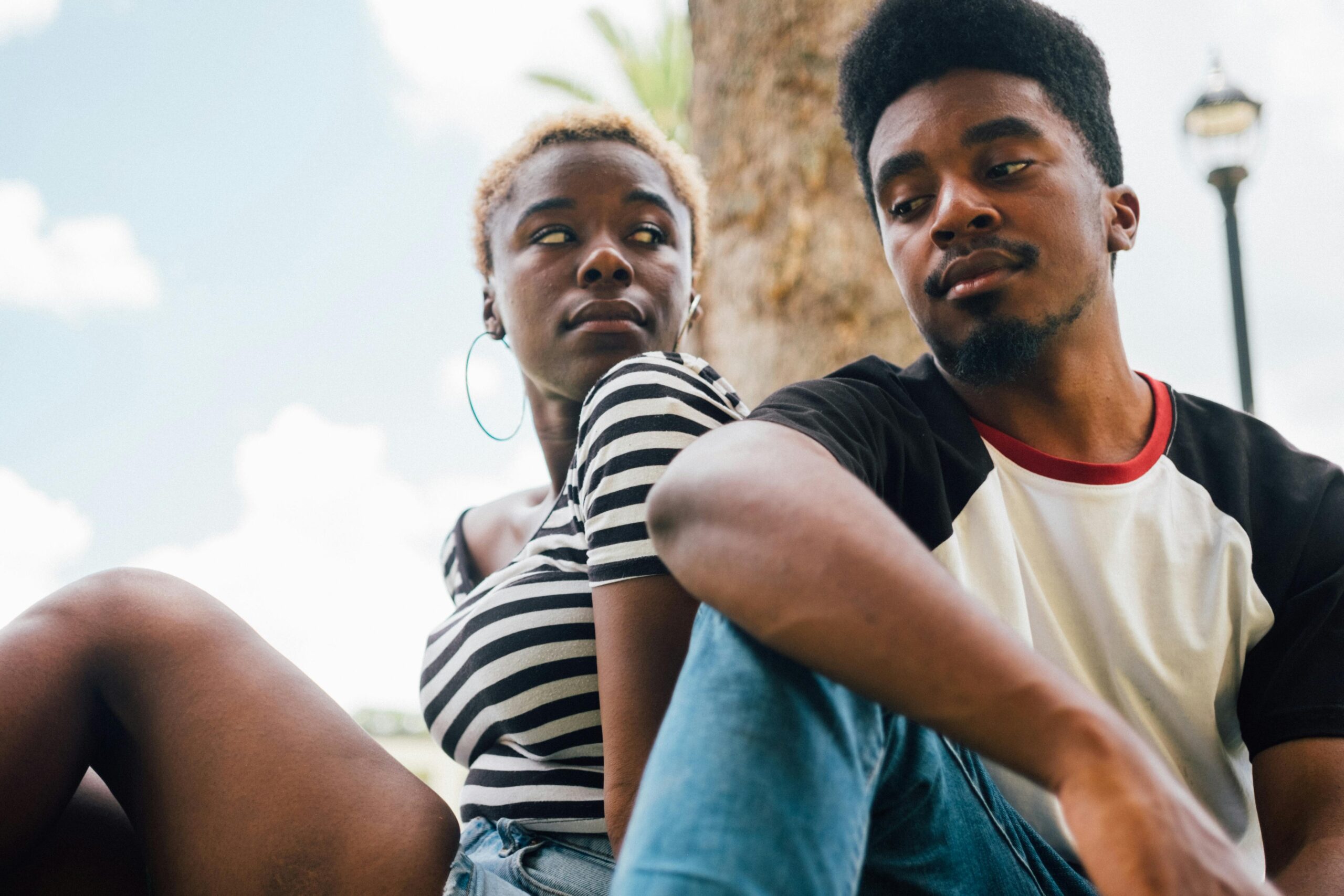
Fertility. Parenthood. Choice. These words carry different weights for different generations, but for Gen Z, they’re wrapped in questions society isn’t always ready to answer. Are we obligated to become parents just because we can? Is womanhood or manhood defined by raising children? How do health, trauma, or freedom shape the way we think about creating life?
For a generation raised in the chaos of economic crises, broken systems, and global uncertainty, the decision to have children is no longer a given. It’s a conversation coloured by personal healing, societal expectations, and even rebellion.
The voices of Gen Z speak with striking clarity. Some want children, but on their own terms. Others feel an unwavering no to parenthood. Many are simply trying to understand their bodies, their fertility, and the future they want.
To better understand this shift, I spoke to a wide range of young people—students, professionals, and creatives. Their insights were raw, diverse, and deeply human, painting a picture of a generation unafraid to think for itself.
“I Don’t Want Kids—And That’s Okay”
For Benter Marion, the decision to remain child-free wasn’t born out of bitterness or confusion; it’s simply who she is.
“I’ve always felt like I don’t want to have children,” she says. “Coming from a large family made me crave personal space. I know having children would mean never having that space, and that’s just not for me.”
Her choice is often met with dismissive remarks. “People say I’m still young and don’t know what I want. But when it comes to other life decisions, suddenly my age isn’t questioned. So when exactly am I old enough for my choice to matter?”
Nyambura, a 25-year-old advocate trainee, echoes this sentiment but from a different angle. Her decision not to have children is deeply rooted in her traumatic childhood.
“I love kids. I’m even a Sunday school teacher,” she explains, “but my childhood was filled with emotional neglect and responsibilities I didn’t choose. I spent my youth raising siblings and walking on eggshells. Now, I just want to care for myself—the little girl in me who never received love. Having children feels like a betrayal of that healing.”
Nyambura’s journey is a reminder that choosing not to have children can be an act of profound self-awareness. “I know I’d be a good mother,” she says, “but I wouldn’t be happy. And with this one short life I have, I won’t step into a version of life that drains me.”
Fertility as a Question of Freedom
Ashley Wairimu, a 21-year-old writer, believes reproductive freedom is about rejecting the idea that motherhood is the default.
“People assume I’ll change my mind, or that I’m selfish or broken for not wanting kids. My choice is deliberate—it’s built on awareness,” she explains. “Reproductive freedom means making decisions about my body without guilt or coercion.”
Benter sees it similarly: “Society has a long way to go in accepting women who choose not to be mothers. People don’t realize that this choice can be deeply emotional and well-thought-out. Not having children doesn’t make us less of women.”
The Emotional Weight of Motherhood
While some Gen Z voices reject parenthood, others see it as a sacred calling. Stacey Martha, 24, an HR professional and aspiring children’s book author, dreams of becoming a mother despite her struggles with fibroids.
“To me, being able to bring life into this world is a superpower,” Stacey says. “It’s a gift from God and I’d endure the pain of childbirth if it means having that blessing.” Martha believes that children complete a family.
Yet her fibroid surgery has left her with lingering fears. “After my surgery, I felt like there was this imaginary clock ticking. What if I don’t have kids before 30 and complications return? Will I have missed my chance? Every period pain reminds me of that fear.”
Another anonymous voice, a 31-year-old student, shares a similar struggle: “I have fibroids, and healthcare is expensive and dismissive. It’s not taken seriously until it’s worse. It’s stressful. I want to be hopeful, but I’m conflicted about motherhood, especially in today’s social and economic climate.”
Gen Z’s “Why” Behind Parenthood
Rolex Odhiambo has a different critique altogether. He questions whether Gen Z truly understands the weight of parenting
“We’re one of the loneliest generations,” Rolex says. “Some want kids just to fill that loneliness or to prove they’re better than their parents. Others think a child will save their relationship. But life isn’t a Sauti Sol song—children don’t come with plates. What happens after the child arrives?” According to him, parenting without preparation creates generational pain.
This raw honesty cuts through romanticized notions of parenting. “Freedom can be abused,” Rolex adds. “We need to ask ourselves if we’re ready, or just reacting to pain.”
A Question of Timing and Readiness
For Nyanza Emmanuel, a journalist from Kakamega, the desire to have kids is strong but measured.
He shares that the decision isn’t just about wanting kids, but about thinking through key realities like emotional readiness, finances, and health. “It’s not as simple as just saying yes,” he reflects. “You have to plan for it.”
Felix Obuya, a digital PR professional, says his childhood shaped his desire to become a parent—but an intentional one.
“We were many siblings born close together. It was hard to get emotional attention,” he recalls. “I want kids, but I want to raise them differently”.
He advises the Gen Z to consider the emotional, financial and psychological cost of early parenting.
Fatherhood, Duty, and Fear
Albert Wambura, a digital media professional, reflects on how his experience growing up without a father has shaped his view of fatherhood.
He shares that when he finally met his father, the emotional disconnect between them was profound. As he processes that loss, he expresses a desire to one day become a father himself—not driven by fear or obligation, but rooted in genuine love. He believes that where fear exists, love cannot fully thrive—highlighting his commitment to showing up differently.
His words cut to the heart of a generation rethinking what fatherhood and responsibility should look like.
Health, PCOS, and the Gaps in Awareness
Teresa Loch, 28, a digital communications specialist and SRHR advocate, highlights a glaring gap: “PCOS is one of the leading causes of infertility, yet management of such conditions is weak and awareness is poor. We need better education and healthcare that addresses these issues whether or not someone plans to have kids.”
Similarly, Stacey points out how a lack of awareness delayed her diagnosis. “No one told me painful periods weren’t normal. I went through primary school, high school, and campus thinking this was just my fate. We need to talk about these issues openly and early.”
The Bigger Picture: Reproductive Justice
Wambui Chege, a journalist and SRHR advocate, frames the issue on a broader scale
“For many young people, fertility isn’t just about having children. It’s about the right to decide if, when, and how to build families. Culture and religion still hold a tight grip on how we view womanhood, queerness and fertility. We need inclusive, non-judgmental conversations that respect every path—whether it’s motherhood, child-free living, or queer people.”
Wambui emphasizes the importance of access: “Many young people are navigating shame, stigma, and a lack of youth-friendly reproductive services. Reproductive justice isn’t about population control—it’s about dignity, choice, and freedom.”
Whose Choice Is It Anyway?
The Gen Z voices on fertility are not uniform—but that’s the point. Some see parenting as a sacred purpose. Others see child-free living as liberation. Many are caught in the middle, grappling with health issues, financial uncertainty, or personal healing.
What they all agree on is this: the choice must be theirs.
So, where do we go from here? Perhaps the real question isn’t whether Gen Z will have children, but whether society is ready to respect every answer they give.


Click here to learn more about our upcoming Fertility Awareness Event.




Add Comment